







The AI Disruption
The burgeoning field of artificial intelligence is undeniably reshaping numerous sectors, sparking widespread professional apprehension about the long-term
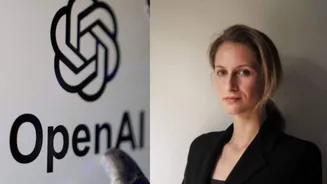
consequences. Professionals are increasingly contemplating the future implications of AI's rapid evolution, particularly concerning potential job displacement and the impact on human cognitive abilities. Hieu Pham, an engineer affiliated with OpenAI, has recently brought this disquieting prospect to the forefront of public discourse. Pham, who holds advanced degrees from Stanford University and Carnegie Mellon University in computer science and machine learning respectively, and has also worked with xAI, articulated a profound sense of unease. In a widely circulated post, he expressed that AI is now presenting a palpable 'existential threat.' He questioned what roles would remain for humans once AI surpasses current capabilities and fundamentally alters the landscape of work and activity, framing it not as a possibility but an inevitability.
Humanity's Future Role
Pham's potent observation ignited a significant online dialogue concerning the potential drawbacks and far-reaching implications of advanced AI. While some commentators acknowledged the transformative nature of AI, they also offered a more optimistic perspective, drawing parallels to previous technological revolutions like the printing press and the internet. These users suggested that AI would likely automate specific tasks rather than eliminate human purpose entirely, asserting that humanity possesses a remarkable capacity for adaptation. Others envisioned a future where human value is decoupled from economic productivity, allowing for the definition of new, potentially more fulfilling societal contributions. One particularly thoughtful response suggested that humanity might need to re-cultivate curiosity and find new avenues in hobbies, as the current pace of life leaves little room for such pursuits.
Broader AI Safety Concerns
Pham's cautionary sentiment resonates with wider discussions in the AI community about safety and the profound societal changes that advanced AI could precipitate. This apprehension is underscored by the recent resignation of Anthropic's AI safety lead, Mrinank Sharma. Sharma, in his public statement, conveyed a deep sense of gravity regarding the world's current trajectory, highlighting not only the risks posed by AI and bioweapons but also a cascade of interconnected global crises. He emphasized the critical juncture humanity is approaching, where the development of our collective wisdom must keep pace with our burgeoning technological power to influence the world. Failure to achieve this balance, Sharma warned, could lead to severe and unforeseen consequences for civilization.