




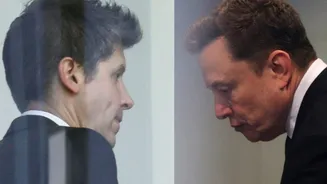

Legal Deadline Missed
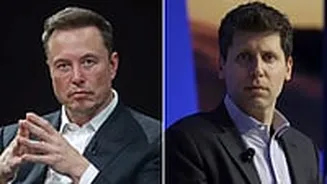
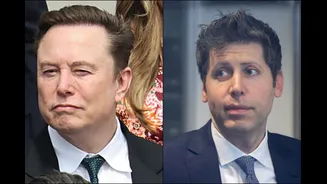
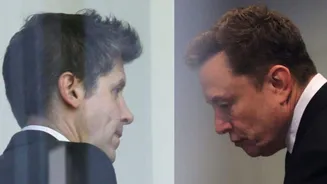
In a significant legal development, a jury has unanimously found that Elon Musk missed the deadline to file his lawsuit against OpenAI, concluding that the statute
of limitations had expired. This crucial verdict led to the dismissal of Musk's claims by the federal court. The nine-person jury, after a brief two-hour deliberation, reached a decision that Judge Yvonne Gonzalez Rogers adopted as the court's own. This ruling effectively halts Musk's legal pursuit, which accused OpenAI and its top executives of deviating from its original mission as a nonprofit dedicated to benefiting humanity. The trial, which commenced on April 27th in Oakland, California, had delved into the intricate relationship and subsequent fallout between the prominent tech figures involved in OpenAI's inception.
OpenAI's Defense Stance
OpenAI and its leadership, particularly CEO Sam Altman, vehemently denied Musk's central accusation that they betrayed a commitment to maintain the company as a nonprofit entity. Their defense argued that there was never an explicit, perpetual promise to keep OpenAI strictly nonprofit. Furthermore, they contended that Musk's lawsuit stemmed from his inability to secure unilateral control over the rapidly evolving AI development company. Musk, who initially invested $38 million in OpenAI's formative years and was a co-founder, alleged that Altman and his deputy shifted the company towards a profit-driven model without his knowledge. The value of OpenAI has since surged to an estimated $852 billion, with aspirations for a major initial public offering.
Claims and Counterclaims
Elon Musk's legal action sought not only the ouster of Sam Altman from his leadership role at OpenAI but also requested damages to be directed towards OpenAI's charitable initiatives. He claimed that Altman and his deputy unjustly enriched themselves as ChatGPT's valuation soared. Greg Brockman, a key figure at OpenAI, revealed during the proceedings that his stake in the company is now valued at approximately $30 billion. OpenAI, however, has characterized Musk's lawsuit as a retaliatory measure, or 'sour grapes,' intended to hinder its progress and boost Musk's own competing AI venture, xAI, launched in 2023. During cross-examination, Musk displayed a combative demeanor, accusing OpenAI's counsel of posing intentionally tricky questions.
Early Vision and Rift
The trial also brought to light the initial dynamics of OpenAI, where both Musk and Altman vied for leadership. Altman testified that he harbored concerns about Musk's desire for greater control over OpenAI, especially as the company aimed to develop artificial general intelligence (AGI) – a form of AI surpassing human capabilities. Altman stated that a primary motivation for founding OpenAI was the belief that AGI should not be solely controlled by any single individual, regardless of their intentions. He expressed deep disappointment, stating that Musk had abandoned the company and its mission, failing to uphold his promises and jeopardizing OpenAI's goals. This marked a painful contrast to his earlier respect for Musk.