






Unveiling Operation Ghazab
In a significant escalation of border tensions, Pakistan initiated a large-scale military operation named 'Ghazab lil-Haq' in the early hours of Friday.
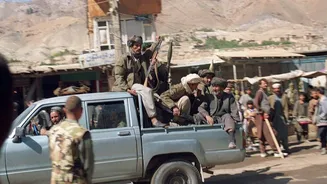
This action comes after a prolonged period of intermittent clashes and accusations. Islamabad alleges that Afghanistan has been providing safe havens to militant groups responsible for attacks within Pakistan. The Pakistani information ministry elaborated that the operation, which translates to 'wrath for justice,' was a direct response to what it described as unprovoked firing by Afghan Taliban forces on multiple border locations in Khyber Pakhtunkhwa's sectors, including Chitral, Khyber, Mohmand, Kurram, and Bajaur. This operation marks a severe deterioration in bilateral relations, with Pakistan's Defence Minister Khawaja Asif declaring the situation as 'open war' between the two nations.
Targets and Casualties
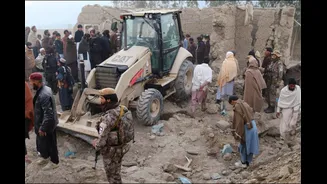
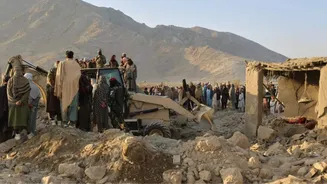
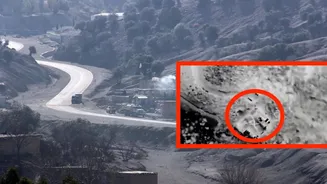
The military action, 'Operation Ghazab lil-Haq,' has seen Pakistan's armed forces carry out targeted strikes on critical Afghan Taliban military installations. Reports indicate that air strikes were conducted in major Afghan cities, including the capital, Kabul, as well as Kandahar and Paktia provinces. Furthermore, the Pakistan Air Force successfully destroyed an ammunition depot in the Nangarhar province. In terms of casualties, the ongoing clashes have resulted in the loss of two Pakistani security personnel. Conversely, Pakistan claims to have eliminated 133 Afghan Taliban operatives during the operation. This retaliatory action is framed by Pakistan as a decisive response to aggression, aiming to dismantle the operational capabilities of groups allegedly operating from Afghan soil.
Broader Geopolitical Context
Pakistan's Defence Minister, Khawaja Asif, articulated the strategic reasoning behind the operation, expressing disappointment that peace in Afghanistan had not materialized as expected following the withdrawal of NATO forces. He stated that Pakistan had hoped the Taliban would prioritize the welfare of the Afghan people and regional stability. Asif emphasized that Pakistan had exhausted diplomatic avenues, both directly and through friendly nations, to foster normalization. However, he asserted that Pakistan's patience had reached its limit, leading to the declaration of 'open war.' The core of Pakistan's grievance lies in its assertion that the Afghan Taliban are harboring groups like the Tehrik-i-Taliban Pakistan (TTP), which has been engaged in a long-standing insurgency against Pakistan. Kabul, however, refutes these claims and counter-accuses Pakistan of supporting groups that target Afghanistan, while also challenging Pakistan's disregard for Afghan sovereignty.