







The Brain's Familiarity Bias
Australian psychologist Millie Hardie illuminates a profound truth about our minds: they are less concerned with discerning absolute reality and more focused
on reinforcing established patterns. This means that whatever thoughts we repeat, whether they are tinged with negativity or imbued with positivity, the brain tends to accept them as familiar. Hardie emphasizes that this process, rooted in neuroplasticity, is the brain's mechanism for change and adaptation. Over time, consistent internal dialogue strengthens these neural pathways, making those repeated thoughts more potent and influential in shaping our perception and reactions. The brain essentially trains itself to respond based on what it hears most frequently from within, irrespective of the factual basis of those thoughts.
Neuroplasticity: Rewiring Your Mind
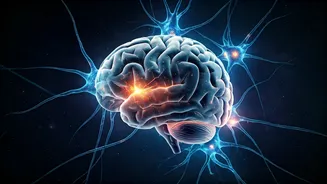
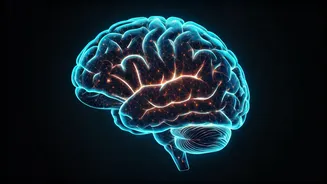
Neuroplasticity, the brain's remarkable ability to reorganize itself by forming new neural connections, is at the core of how self-talk impacts our mental landscape. Millie Hardie explains that when we consistently engage in specific thought patterns, especially with emotional intensity, our brain begins to wire itself around these ideas. This continuous repetition acts like a mental workout, solidifying certain pathways and making them more easily accessible. Consequently, negative self-criticism can actively train the brain to anticipate adverse outcomes, influencing our emotional state and, over an extended period, fundamentally shaping our sense of self and identity. Conversely, this same mechanism can be leveraged for positive change.
Harnessing Thoughts for Positivity
The transformative power of neuroplasticity extends beyond overcoming negative patterns; it also offers a pathway to cultivating a more positive mental state. Hardie highlights that our brains often blur the lines between actual experiences and vividly imagined ones. This understanding suggests that visualization is not merely a whimsical exercise but a powerful mental rehearsal. By repeatedly imagining ourselves as calm, confident, and capable, we are actively engaging in a process that can reshape our ingrained mental patterns. This deliberate practice of visualizing desired outcomes can help to build new, more constructive neural connections, fostering a more optimistic outlook and reinforcing positive self-perceptions.
Observing, Not Believing
A crucial step in managing our mental well-being lies in understanding that our thoughts are transient visitors, not necessarily truths to be blindly accepted. Hardie advises that we do not inherently 'own' our thoughts, and therefore, we are not obligated to believe every single one that crosses our minds. Learning to observe our thoughts with a degree of detachment, rather than immediately reacting to them, is a key skill. This practice allows us to gain a more conscious control over our internal dialogue and, by extension, our mental health. By shifting from automatic acceptance to mindful observation, we can begin to influence the quality of our internal input, which in turn, leads to more favorable emotional and behavioral outputs.