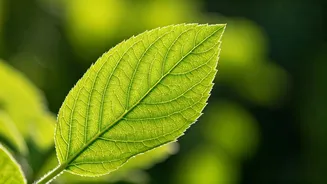

Breathing Revealed: Stomata
The remarkable innovation allows scientists to observe the intricate process of how plants 'breathe', a feat made possible by focusing on stomata. These
microscopic pores, found on the surface of leaves, act as gateways, managing the exchange of crucial gases like carbon dioxide, oxygen, and water vapor. Think of them as tiny mouths, opening and closing to regulate the plant's internal environment. The ability to visualize this process offers a new window into plant life, providing a deeper understanding of how plants respond to their surroundings and thrive. This groundbreaking technology is anticipated to revolutionize how researchers study plant physiology, paving the way for advances in agriculture and environmental science. It is essential to recognize the pivotal role that stomata play in the overall health and functionality of plants, contributing to their survival and the broader ecosystem.
Gas Exchange Unveiled
Stomata, the key players in plant respiration, meticulously control the delicate balance of gas exchange. They open to absorb carbon dioxide, a vital ingredient for photosynthesis, the process that fuels plant growth, and release oxygen as a byproduct. Water vapor also escapes through these pores in a process known as transpiration. This process is essential for cooling the plant. The opening and closing of stomata are not random; they are regulated by environmental factors, such as light levels, humidity, and the availability of water. Scientists can now analyze the minute-by-minute functioning of stomata. This opens up avenues for understanding how plants respond to climate change, pollution, and various stressors. It is a big step to unlock insights into plant resilience and optimizing crop productivity.
Why This Matters Greatly
The ability to observe plant respiration in real time is a monumental leap, carrying significant implications for various fields. Understanding how stomata function provides scientists with an unprecedented opportunity to analyze plant responses to environmental changes. This knowledge is crucial in agriculture, as it helps develop more resilient crops capable of withstanding drought, disease, and changing climate patterns. Furthermore, it assists in efforts to combat climate change, as plants play a key role in absorbing carbon dioxide from the atmosphere. This breakthrough underscores the intricate connections within ecosystems and emphasizes the importance of understanding the fundamental processes that govern life on Earth. The potential applications extend to environmental conservation and even the development of sustainable practices.
Future Research Horizons
The revelation of plants 'breathing' creates exciting avenues for future research. Scientists are now equipped to explore how different plant species respond to environmental changes and stressors, giving researchers the chance to fine-tune cultivation practices. The capability to study stomata in such detail facilitates the investigation of plant diseases and the development of more effective treatments. Moreover, this groundbreaking technology provides a platform to uncover the intricate communication networks within plants, including how they respond to signals from their surroundings. Such understanding will not only enrich our scientific knowledge but also guide endeavors to protect biodiversity and promote environmental sustainability. The insights gained from observing plant respiration are anticipated to continue to advance the intersection of science and conservation.