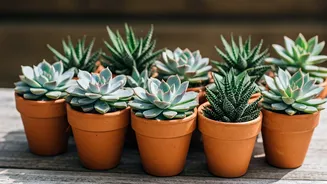

Echeveria Elegance
Echeveria Elegance stands out as a top choice. This succulent has lovely rosette shapes with thick, fleshy leaves. It's relatively small, growing to about
6-8 inches wide. It is known for its graceful appearance. Echeverias require bright, indirect sunlight, especially when grown indoors. Watering should be done sparingly, allowing the soil to dry completely between waterings to prevent root rot. This succulent thrives in well-draining soil, like a cactus mix, and is a great option for those new to gardening. They offer a simple yet effective way to add some flair to windowsills, desks, or shelves with minimal effort, making them a great starting point for any succulent enthusiast. The variety of colors, ranging from soft greens to pinks, also makes them highly desirable.
Sedum Rubrotinctum
Next on the list is Sedum Rubrotinctum, famously known as 'Jelly Bean' or 'Pork and Beans'. This unique succulent features plump, bean-shaped leaves that change color depending on the amount of sunlight they receive. In full sun, these leaves turn vibrant red. This species is very easy to propagate and grow, needing little water and tolerating neglect, perfect for those with busy schedules. It requires well-draining soil and plenty of sunlight, but can also adapt to partial shade. To propagate, simply break off a leaf and plant it in soil – soon, it will develop roots. 'Jelly Bean' is great for hanging baskets or containers where its cascading form can be showcased. Sedum Rubrotinctum truly brings a playful element to any plant collection with its vivid appearance.
Aloe Vera Majesty
Aloe Vera is another great pick, celebrated not just for its beauty but also its medicinal properties. Aloe Vera has long, fleshy leaves that contain a soothing gel, great for treating minor burns and skin irritations. They require bright, indirect sunlight and need watering only when the soil is completely dry. Overwatering is a common mistake, which can lead to root rot, so letting the soil dry out is key. Aloe Vera adapts well to various soil types but prefers a well-draining mix. These plants are relatively low-maintenance, and are ideal for those who want a practical and visually appealing succulent. They often produce pups or offshoots, which can be easily separated and replanted, expanding your collection.
Haworthia Zebra Appeal
For a unique look, consider Haworthia Zebra. These succulents are famous for their dark green leaves marked with striking white, raised tubercles, resembling zebra stripes. Haworthias are small and slow-growing, making them suitable for compact spaces. These plants prefer bright, indirect light and need minimal watering. It’s crucial to let the soil dry out between waterings to prevent root rot. Haworthia Zebra is a great indoor plant, thriving under artificial light. It thrives in well-draining soil and are generally quite resilient to pests and diseases, which is suitable for beginners. Their distinctive appearance makes them a great conversation starter and an eye-catching addition to any succulent garden. They're also easy to propagate through offsets.
Crassula Ovata Joy
Crassula Ovata, commonly known as the Jade Plant, is a classic. It features thick, woody stems and fleshy, oval-shaped leaves, resembling tiny jade stones. They are easy to grow, needing bright light and infrequent watering. Jade plants store water in their leaves, so overwatering is a common mistake. They grow well in well-draining soil and can live for many years. Jade plants can grow into small, tree-like structures over time. They are easy to propagate from leaf or stem cuttings, making them great for sharing with friends. They are considered symbols of good luck and prosperity in some cultures, making them a perfect addition for homes and offices. With proper care, they can even produce small, star-shaped white or pink flowers.
Sempervivum Resilience
Sempervivum, often called 'Hens and Chicks,' is known for its hardiness. These succulents grow in a rosette shape, producing small 'chicks' around a larger 'hen' plant. Sempervivums thrive in full sun and well-draining soil. These plants are exceptionally drought-tolerant. They are perfect for rock gardens or containers. The variety of colors and textures, from green to reddish hues, makes them very visually appealing. These are very easy to propagate; simply remove the 'chicks' and replant them. Sempervivums are cold-hardy and can tolerate harsh weather conditions. They are also relatively pest-free, offering a fuss-free gardening experience. They are a good choice for those living in cooler climates, bringing color and life to the garden throughout the year.
Kalanchoe Blossfeldiana Charm
Kalanchoe Blossfeldiana is valued for its vibrant flowers and is commonly found in a variety of bright colors such as red, pink, yellow, and orange. These succulents require bright, indirect light to thrive. Kalanchoes need well-draining soil and moderate watering, letting the soil dry out between waterings. These plants typically bloom during the winter months, bringing cheer to indoor spaces. Kalanchoes are relatively low-maintenance plants that can be enjoyed for years with the proper care. They can be propagated through cuttings, making it easy to grow more plants. This plant also responds well to being pruned for shape, which helps encourage more blooms. They make excellent gifts and are easy to brighten up any room with their colorful displays.
Senecio Rowleyanus Delight
Senecio Rowleyanus, or 'String of Pearls,' is a trailing succulent that adds a unique touch to hanging baskets or elevated planters. The plant has long stems adorned with small, spherical leaves resembling pearls. 'String of Pearls' requires bright, indirect sunlight and is drought-tolerant, so it is important to avoid overwatering, letting the soil dry out completely between waterings. They prefer well-draining soil to prevent root rot. These plants are easy to propagate by taking cuttings and allowing them to root in moist soil. The unique appearance of the 'String of Pearls' makes it a great choice for adding a distinct element to any indoor or outdoor space, providing a cascading, elegant look. Their easy care makes them a popular choice.
Portulacaria Afra Grace
Portulacaria Afra, often called 'Elephant Bush,' is a succulent native to South Africa, which can be easily shaped through pruning. This plant features small, rounded leaves and reddish stems, growing into a small shrub or tree over time. It requires bright light and infrequent watering, allowing the soil to dry between waterings. Portulacaria Afra is relatively easy to care for and adapts well to various conditions. It can be propagated through cuttings, and new plants can develop quickly. This succulent is an excellent choice for bonsai projects. They are versatile plants that can be grown indoors or outdoors in warmer climates, adding a touch of natural elegance to any setting.
Lithops Simplicity
Finally, we have Lithops, commonly called 'living stones,' because of their stone-like appearance. These unique succulents are known for their ability to blend into their surroundings, mimicking the rocks of their native environment. Lithops thrive in full sun and very well-draining soil. It is crucial to avoid overwatering these plants, which is a common mistake and can lead to death. Water them sparingly during the growing season and reduce watering during dormancy. They are slow-growing and perfect for small containers. These plants add a touch of novelty and intrigue to any succulent collection. They come in various colors and patterns, providing a visually interesting element, and their simplicity in care makes them perfect for beginners.