

The Data Deluge
In today's digital-first world, the sheer volume of information generated annually is staggering. From personal photos and emails to critical scientific
research and the vast datasets powering artificial intelligence, the demand for storage solutions is escalating rapidly. As AI systems become more sophisticated, they require ever-larger repositories of data, placing immense pressure on existing storage technologies. This relentless growth necessitates a fundamental shift in how we preserve our digital heritage, moving beyond short-term fixes to long-term, robust preservation methods that can withstand the test of time and technological obsolescence.
Project Silica's Vision
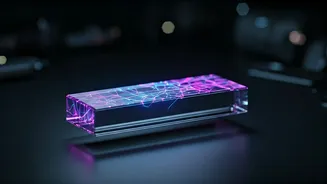
Microsoft's research arm, known as Project Silica, has unveiled a visionary approach to digital archiving that transcends the limitations of current technologies. Their innovative method involves inscribing digital information directly into solid pieces of glass using highly precise, ultra-fast lasers. The implications are profound: data stored using this technique is projected to remain accessible and intact for an astonishing 10,000 years. This stands in stark contrast to conventional storage media like hard drives, magnetic tapes, and even solid-state drives, all of which are susceptible to degradation and data loss over time, a phenomenon often termed 'data rot'. Consequently, these traditional methods require frequent data migrations and backups, incurring significant costs and effort to prevent permanent loss.
Laser Precision Writing
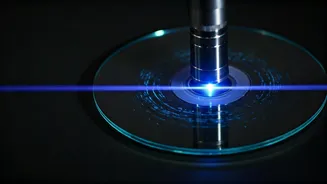
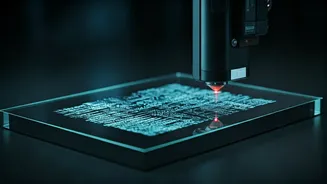
The process by which data is etched into glass is remarkably sophisticated, bordering on the futuristic. Researchers employ femtosecond lasers, which emit pulses lasting a mere one quadrillionth of a second. These lasers are so finely tuned that they can meticulously alter the interior structure of the glass, creating microscopic modifications without causing any surface damage. This level of precision is comparable to that used in delicate medical procedures like eye surgery. Instead of storing information in binary bits, as is common in digital storage, this method embeds data as three-dimensional structures called voxels within the glass. These voxels, essentially three-dimensional pixels, represent the digital information encoded deep within the material's matrix. A significant advancement highlighted in a recent scientific publication involves the use of 'phase voxels' within more cost-effective materials. Initially, the experiments utilized expensive fused silica glass, but the team has since transitioned to using borosilicate glass, a robust and widely available material also found in kitchenware, substantially reducing the overall expense of the storage medium.
Retrieving Stored Data
While inscribing data is a crucial step, the ability to retrieve it accurately is equally important. Project Silica addresses this by utilizing automated archival systems. These systems employ robotic mechanisms to select and retrieve the correct glass storage units. Subsequently, a sophisticated neural network scans the glass, decoding the intricate patterns of voxels embedded within. A key advantage of this storage method is its passive preservation. The data itself does not require continuous power to be maintained; power is only needed during the retrieval process when the data is actively being accessed and read. Microsoft has already demonstrated the viability of this technology through successful pilot projects. In 2019, they famously stored the entire 1978 film 'Superman' within a compact piece of glass. Furthermore, this technology is being implemented in Norway's Svalbard region for the Global Music Vault, an initiative dedicated to safeguarding musical recordings for future generations.
Glass: The Enduring Medium
The inherent properties of glass make it an exceptionally resilient medium for long-term data storage. It exhibits remarkable resistance to environmental factors such as extreme heat, humidity, and electromagnetic interference. Moreover, it can withstand significant physical impacts, further enhancing its durability. Unlike conventional storage solutions that degrade over time and necessitate frequent replacements, glass offers a stable, almost immutable platform for data. This inherent longevity also contributes to environmental sustainability, as it eliminates the need for constant manufacturing and disposal of aging storage devices. If this technology can be scaled for commercial use, it holds the potential to revolutionize how vital information is preserved by governments, institutions, and corporations, ensuring that our digital history, scientific knowledge, and cultural achievements are accessible for millennia to come.