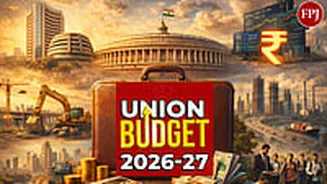

Infra First Strategy
The Union Budget 2026 showcases a strong emphasis on infrastructure, reflected in a substantial increase in public capital expenditure, which has been
raised to ₹12.2 lakh crore. This commitment underscores the government's strategy of prioritizing infrastructure development to stimulate economic growth. The budget allocates resources to various projects, including the development of high-speed rail corridors, with a focus on connecting key cities. Seven such corridors have been announced. These corridors include the Mumbai-Pune and Hyderabad-Bengaluru routes, promising to enhance connectivity and boost economic activity in these regions. Furthermore, the budget introduces dedicated rare earth corridors for states like Odisha, Kerala, Andhra Pradesh, and Tamil Nadu, aiming to strengthen critical supply chains and promote industrial growth in these areas. This multifaceted approach to infrastructure development is a core element of the government's economic strategy for the coming fiscal year.
Defence Sector Boost
In a strategic move, the Union Budget 2026 has significantly increased the defense budget, with a jump to ₹7.85 lakh crore. A notable portion of ₹2.19 lakh crore has been specifically earmarked for the modernization of the defense sector. This increased investment underscores the government's commitment to enhancing national security and strengthening its defense capabilities. The allocation reflects a broader strategy to ensure that India's armed forces are equipped with the latest technology and resources. The focus on modernization also aims to bolster the country's self-reliance in defense manufacturing. This initiative aligns with the government's vision to fortify India's position on the global stage, ensuring it is well-prepared to address evolving security challenges. The budget signifies the government's recognition of the critical importance of a robust defense sector for national security and strategic stability.
Taxation and Compliance
The Union Budget 2026 introduces changes in the income tax landscape, with a new Income Tax Act set to be implemented from April. The budget, however, maintains the existing income tax slab structure, offering continuity for taxpayers. The focus is on a major compliance reset, aiming to streamline the tax filing process and enhance transparency. Additionally, the government has announced an increase in the individual investment limit for overseas residents, doubling it to 10%. This measure is intended to encourage foreign investment and promote economic growth. The budget also provides clarity on the Section 87A rebate limit under the new income tax regime for the fiscal year 2026-27, providing taxpayers with greater clarity. These tax-related initiatives collectively aim to simplify tax regulations, attract investments, and support the ease of doing business in India. The government's moves are part of its broader strategy to foster a business-friendly environment and stimulate economic development.
MSME and Agri Support
Budget 2026 targets tariff risks by rolling out a ₹10,000 crore lifeline for MSMEs. This initiative is designed to support the Micro, Small, and Medium Enterprises (MSMEs) sector, recognizing its critical role in India's economy. The support includes measures to mitigate the impact of tariffs and other trade-related challenges. In a significant boost for the agricultural sector, the budget unveils a comprehensive package focused on subsidies, job creation, and the integration of AI tools. This initiative aims to help farmers enhance their productivity, income, and overall well-being. Subsidies are being provided to ease the financial burden on farmers. Efforts are made to create more job opportunities within the agricultural sector and encourage the use of Artificial Intelligence (AI) to improve farming practices and efficiency. These measures collectively aim to strengthen the agricultural sector and ensure the welfare of the farming community.
Health and Innovation
The Union Budget 2026 includes several significant health sector updates. The government has announced the waiver of customs duty on drugs used for treating cancer and rare diseases. This move is aimed at reducing the financial burden on patients and ensuring greater access to essential medicines. Additionally, the budget supports the launch of the 'India Semiconductor Mission 2.0,' demonstrating a focus on technological advancement and innovation. This mission is intended to boost the semiconductor industry. This initiative supports the government's efforts to position India as a key player in the global semiconductor market. These health-related initiatives demonstrate a commitment to improving healthcare access and supporting technological innovation.