
Michigan Snowstorm Incident
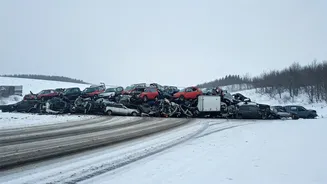
The United States was recently struck by a severe snowstorm, triggering a massive road accident. This incident, which involved an extensive pileup of over
one hundred vehicles in Michigan, highlighted the potential for extreme weather to cause widespread disruption. The severity of the incident underscored the challenges that arise in managing traffic and ensuring public safety during adverse weather conditions. Road closures and emergency response efforts were required to deal with the aftermath, as authorities worked to clear the site and assist those involved. The scale of the accident also drew attention to the broader implications of climate change on infrastructure and transport safety, signaling the need for more robust weather preparedness strategies and risk management protocols to mitigate the effects of such weather-related emergencies. It was a stark reminder of nature's power and its potential to halt normal routines.
France's Gaza Stance
France chose not to endorse Donald Trump's proposed Board of Peace for Gaza, indicating a divergence in international perspectives on handling this specific complex regional issue. This decision reflects France's autonomous approach to foreign policy and its dedication to an independent course on international matters. This choice implies that France is prioritizing a different vision from the United States regarding the prospects for peace in the Gaza region. The decision also shows France's inclination to protect its own international goals. It also highlights the different ideas among international players for navigating the delicate challenges of the area, making clear the difficulties in reaching a global consensus on conflict resolution. This divergence of views represents the international arena's diverse geopolitical makeup.
EU and Greenland Issue
Significant division exists among EU member countries concerning whether the bloc should directly address the US-Greenland matter. This schism illustrates the complexities involved in international relations and the varying priorities of individual countries within a larger alliance. The disagreement shows the various perspectives and strategic thinking that shape the EU's foreign policy approaches and its capacity to act in a uniform way on global concerns. Some EU members may favor direct engagement to defend shared values, interests, or geopolitical influence. Others could opt for a more cautious stance, emphasizing the need for multilateral cooperation or prioritizing internal unity within the bloc. The differing approaches show the delicate process of achieving consensus and the difficulty of formulating a cohesive foreign policy response. The EU's ultimate decision on this matter will likely have important consequences for its relationship with both the United States and Greenland.