







Market Drivers
Gold prices are subject to many factors that influence their value. These are primarily centered around global economic conditions, the strength of the U.S.
dollar, and geopolitical instability. The world's economic health, reflected in inflation rates and interest rates, plays a significant role. When inflation rises, investors often turn to gold as a hedge against the diminishing value of their other assets. Interest rates also influence gold prices; lower rates make gold more attractive compared to interest-bearing assets. Moreover, geopolitical events such as wars, political unrest, or significant international tensions frequently drive gold prices up, as investors seek safe havens for their wealth during uncertain times. The price of gold is also impacted by the strength of the U.S. dollar, as it is often priced in dollars; a weaker dollar usually makes gold cheaper for buyers using other currencies, boosting demand and price. Market sentiment and speculation also play a role, with news, rumors, and trading behavior impacting short-term price movements. Understanding these drivers is essential to forecast gold price fluctuations.
Economic Indicators
Economic indicators supply key information for predicting gold prices. Inflation figures, usually measured by the Consumer Price Index (CPI) and the Producer Price Index (PPI), give crucial clues. When inflation climbs, gold commonly attracts investors looking to preserve their purchasing power. Interest rate decisions made by central banks, especially the Federal Reserve in the U.S., significantly impact gold. Higher interest rates typically diminish gold's appeal as an investment because they raise the opportunity cost of holding the non-yielding asset. Gross Domestic Product (GDP) growth indicates economic health; strong GDP growth might lead to decreased demand for safe-haven assets like gold, while slower growth or recession can boost gold prices. Employment data, including unemployment rates and non-farm payrolls, shows overall economic health. A weak labor market may support gold prices, reflecting economic uncertainties. Additionally, the U.S. dollar's performance is essential, as gold is traded in dollars. A weak dollar can raise gold prices, as it becomes more affordable for foreign buyers. All these economic indicators, combined, provide a comprehensive view that analysts use to forecast gold price changes.
Geopolitical Impact
Geopolitical events substantially influence gold prices, often causing rapid movements. Conflicts, political instability, and global uncertainties tend to propel gold prices higher as investors seek shelter for their assets. For example, during times of war or heightened international tensions, gold's safe-haven status becomes very attractive, increasing demand and prices. Political unrest within major economies can similarly drive investors to gold, as they search for stability. The outcome of significant elections, trade negotiations, and policy changes can also affect gold prices. Unexpected results or decisions may lead to uncertainty and subsequently boost the demand for gold. Economic sanctions and trade wars also influence the market. Sanctions and trade disruptions can create economic uncertainty, which often increases gold prices as a result of investors flocking towards safe assets. Global events like terrorist attacks or major natural disasters can generate fear, leading to gold price spikes. Overall, monitoring political events is critical for understanding the gold market's dynamics.
Supply and Demand
The relationship between supply and demand is fundamental to gold price determination. Gold supply originates primarily from mining operations and, to a smaller degree, from recycled gold. New discoveries and the efficiency of mining companies affect the supply. Significant discoveries can increase the supply and potentially decrease prices, while challenges in mining may restrict supply, thus increasing prices. Demand for gold comes from various sources, including investors, central banks, and the jewelry industry. Investment demand can fluctuate widely based on economic conditions and market sentiment. During times of economic uncertainty, investment demand usually rises. Central banks hold gold as part of their foreign reserves, and their buying or selling activities significantly impact the market. The jewelry industry constitutes a significant portion of gold demand, especially in countries like India and China, where gold is an important cultural element. Changes in consumer behavior, influenced by economic conditions and cultural practices, affect jewelry demand. Therefore, the balance between supply, driven by mining output and recycling, and demand, affected by investments, central banks, and jewelry consumption, fundamentally shapes gold prices.
Technical Analysis
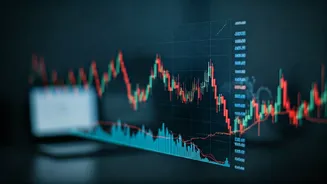
Technical analysis assists in evaluating gold price trends through historical data. This approach focuses on chart patterns, trading volumes, and various indicators to forecast potential future price movements. Moving averages are frequently used to identify trends; these averages smooth the price data over a specific period, signaling potential support or resistance levels. Support levels indicate where prices have previously found buying interest, while resistance levels suggest where selling pressure has been high. Chart patterns, like head and shoulders or double tops/bottoms, provide insights into market sentiment and possible price movements. Trading volume provides information about the strength of a price movement; higher volume during an upward trend may signify strong buying interest. Technical analysts use indicators such as the Relative Strength Index (RSI) and Moving Average Convergence Divergence (MACD) to detect overbought or oversold conditions and potential trend reversals. These tools aid in making trading decisions. Technical analysis, combined with an understanding of economic factors, offers a comprehensive approach to forecasting gold price changes.
Market Sentiment
Market sentiment plays a significant role in gold price movements. This reflects the overall attitude or feeling of investors towards gold. Positive sentiment, driven by economic uncertainty or geopolitical tensions, tends to increase demand and drive prices upward. Conversely, negative sentiment can result in decreased demand and falling prices. News headlines, economic reports, and social media influence market sentiment. Positive news about the economy or a decrease in geopolitical risks can lead to less demand for gold as a safe haven, decreasing its price. Social media and online discussions can amplify sentiments, creating trends and rapid price movements. Investor psychology also impacts market sentiment. Fear and greed are powerful emotions that can greatly influence trading decisions. During times of high uncertainty, fear might drive investors to buy gold. Conversely, during periods of economic stability, greed might make investors look for higher-yielding assets. Understanding market sentiment helps in interpreting price movements. Analyzing various indicators, such as the Commitment of Traders (COT) report, which shows the positioning of different market participants, can provide insights into current market sentiment. Monitoring market sentiment gives a deeper understanding of the gold price dynamics.