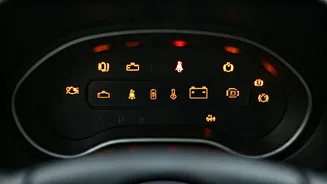

Engine Check Light
The engine check light, often shaped like an engine block, is perhaps the most dreaded. When it illuminates, it indicates a potential problem within the engine or
emissions system. The reasons can be varied, including a loose gas cap, a faulty oxygen sensor, or even serious issues like catalytic converter failure. Ignoring this light can lead to decreased fuel efficiency, poor performance, and even costly repairs. If the light blinks, it usually signifies a more urgent issue, like a misfire that could damage the catalytic converter. It's crucial to get your car inspected by a mechanic as soon as possible if this light appears. The diagnostic process can identify the root cause, allowing for timely repairs and preventing further damage.
Oil Pressure Warning
The oil pressure warning light, often depicted as an oil can, is critically important. It alerts you to low oil pressure, meaning the engine isn't getting adequate lubrication. This is a severe issue because oil lubricates the engine's moving parts, preventing friction and wear. If this light comes on, it's vital to pull over and shut off the engine immediately. Continued driving with low oil pressure can lead to catastrophic engine damage, resulting in thousands of rupees in repair costs. Check your oil level manually, and add oil if necessary. If the light persists, a professional inspection is required to check for leaks or other underlying problems within the oil system.
Battery Warning Light
The battery warning light, resembling a battery, signals a problem with the car's charging system. This doesn't necessarily mean the battery itself is faulty. It could be an issue with the alternator, which charges the battery while the engine runs, or even a loose or corroded connection. When this light comes on, the battery isn't being charged correctly, and your car will eventually lose power. If the light illuminates, try to avoid unnecessary electrical use and drive straight to a mechanic to get the charging system tested. Ignoring this light could leave you stranded and damage components like the battery or alternator.
Brake System Warning
The brake system warning light, often an exclamation mark inside a circle, signifies issues with the brakes. It could indicate a low brake fluid level, a problem with the anti-lock braking system (ABS), or even a parking brake that's still engaged. If the brake warning light is on, it's crucial to inspect your brake fluid level first. Low fluid might suggest a leak, reducing your braking effectiveness. Test your brakes carefully to ensure you can stop safely. ABS lights indicate a fault in the ABS system, which prevents wheel lock-up during hard braking. Driving with a faulty ABS system reduces your control in emergency stops. Schedule a mechanic check to identify and fix the underlying brake problem.
Temperature Warning Light
The temperature warning light, often a thermometer submerged in liquid, warns of engine overheating. Overheating can seriously damage the engine, leading to cracked cylinder heads, warped engine blocks, and other costly repairs. This light illuminates when the engine's coolant temperature is too high. If you see this light, pull over immediately and switch off the engine to let it cool down. It's often caused by a coolant leak, a faulty thermostat, or a malfunctioning water pump. Avoid opening the radiator cap while the engine is hot, as this can cause severe burns. Once the engine has cooled, check the coolant level, and consider getting your car towed to a mechanic to identify the root cause.
ABS Warning Light
The ABS (Anti-lock Braking System) warning light, typically the letters 'ABS' inside a circle, signals a malfunction within the ABS. While this doesn't directly affect your regular braking ability, it means the ABS won't be operational. The ABS prevents wheel lock-up during hard braking, allowing you to maintain steering control. When the ABS light is on, the car will still brake but without the assistance of the anti-lock system. This could mean longer stopping distances and reduced control in emergencies. The underlying problem could be a faulty wheel speed sensor, a problem with the ABS module, or wiring issues. Get the system checked by a mechanic as soon as possible to ensure proper braking performance.
Tire Pressure Warning
The tire pressure monitoring system (TPMS) warning light, often a horseshoe-shaped symbol with an exclamation point, alerts you to low tire pressure in one or more tires. Proper tire pressure is critical for several reasons: optimal fuel efficiency, even tire wear, and vehicle handling. Driving with under-inflated tires can reduce fuel economy, cause premature wear, and increase the risk of a blowout. When the TPMS light illuminates, check your tire pressure using a pressure gauge and inflate the tires to the manufacturer's recommended pressure. This value is usually listed on a sticker inside the driver's side door or in the owner's manual. If the light remains on after inflating the tires, there may be a problem with the TPMS sensor. In such a situation, consult a mechanic.