





A New Health Hurdle
Following a significant surgical intervention last year to remove a tennis ball-sized cancerous growth from her liver, television personality Dipika Kakar
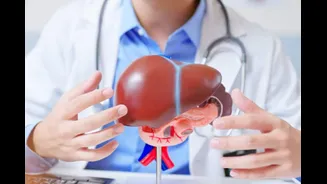
is once again in the spotlight for health-related reasons. Recent medical follow-ups have identified a new 13mm cyst within her liver. This development was shared by her husband, Shoaib Ibrahim, via a YouTube vlog, detailing how the concern arose after Kakar experienced persistent mild stomach pain that escalated into more pronounced discomfort. The couple promptly sought medical advice, leading to diagnostic imaging which revealed the presence of this new lesion. Kakar herself mentioned experiencing a related shoulder ache, which, while reportedly not directly linked to the cyst by doctors, added to their growing alarm, given the history of her condition. The cyst was not apparent during a PET scan conducted in December, making its recent detection a point of concern for the medical team.
Treatment and Expert Insights
The medical team has opted for a minimally invasive approach to address the newly discovered 13mm liver cyst. Instead of another major surgery, the plan involves a procedure to 'burn' the cyst. This is anticipated to require a 3-4 day hospital stay, with the treatment scheduled for Tuesday. Shoaib Ibrahim explained that their doctor had previously cautioned about the potential for recurrence with aggressive tumor types. Although the current cyst is detected early, the slight elevation in blood test markers and its absence on the December PET scan prompted immediate action. Experts note that it's common to find small cysts or new spots after liver tumor removal, with many being benign and related to healing or scar tissue. However, distinguishing these from early cancer recurrence is crucial. Dr. Fahad Afzal highlights that techniques like radiofrequency ablation (RFA) or microwave ablation (MWA) are typically used to 'burn' such lesions, performed under imaging guidance without extensive surgery. Dr. Mandeep Singh Malhotra adds that for lesions under 3 cm, ablation is effective, but consistent monitoring remains vital due to the possibility of recurrence elsewhere.
Evolving Treatment Strategies
The recent detection of the liver cyst may lead to adjustments in Dipika Kakar's ongoing treatment regimen. Her husband, Shoaib Ibrahim, indicated that current oral chemotherapy might be discontinued in favor of immunotherapy. Oncologists typically consider shifting treatment strategies when current therapies, such as oral chemotherapy or targeted therapy, cease to be effective. This decision can be influenced by the emergence of significant side effects or evidence of disease progression on scans. Immunotherapy, specifically checkpoint inhibitors, can offer sustained control for some liver cancer patients, potentially prolonging survival. However, Dr. Afzal emphasizes that responses to immunotherapy are not guaranteed, the treatment can be costly, and it requires diligent monitoring for immune-related side effects, including potential liver inflammation, under the guidance of experienced medical professionals. Dr. Rakesh Sharma further stresses the importance of this close, long-term follow-up.