







Roots of the Conflict
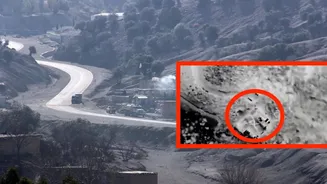
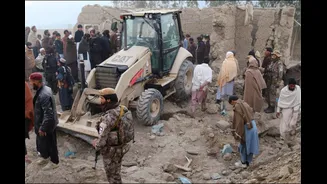
The relationship between Pakistan and Afghanistan has reached a critical juncture, marked by recent Pakistani air strikes deep within Afghan cities. This
aggressive move followed an attack by Afghan forces on Pakistani border personnel, signifying a dangerous increase in long-simmering border skirmishes. Pakistan's Defence Minister declared the Taliban government's actions as an act of 'open war,' highlighting a significant downturn in relations. Initially, Pakistan welcomed the Taliban's return to power in 2021, but this goodwill evaporated as Islamabad began accusing Kabul of providing sanctuary to militants from the Tehreek-e-Taliban Pakistan (TTP) and separatists from Balochistan. Conversely, Afghanistan denies these accusations, countering with claims that Pakistan shelters fighters belonging to the Islamic State, a rival of the Afghan Taliban. Islamabad contends that a lack of sustained ceasefire adherence, attributed to continuous militant attacks originating from Afghanistan, has led to recurrent clashes and border closures, severely disrupting trade and movement along their shared, rugged frontier.
The Durand Line Dilemma
A primary source of contention between Pakistan and Afghanistan is the Durand Line, a 2,640-kilometer border established in 1893. Originally demarcating British and Afghan spheres of influence, it now serves as the international border between the two nations. While Pakistan accepts this demarcation, Afghanistan refuses to recognize it. This line cuts through Pashtun tribal territories and Balochistan, geographically separating these communities that reside on both sides. Prior to the British withdrawal from India, Afghanistan advocated for the Durand Line to be nullified, which would have resulted in all Pashtun lands that became part of British India reverting to Afghanistan, making the Indus River the new border. However, this proposal never materialized, creating a persistently volatile border region that continues to be a flashpoint for disputes and escalations, impacting regional stability.
Triggering the Latest Clashes
Recent military actions were reportedly sparked by what Pakistani security officials termed 'irrefutable evidence' linking militants operating within Afghanistan to a recent spate of attacks and suicide bombings targeting Pakistani military and police. These sources identified seven planned or executed attacks since late 2024 that they claim have direct ties to Afghanistan. A particularly devastating attack last week in the Bajaur district, which resulted in the deaths of 11 security personnel and two civilians, was attributed by Pakistani security sources to an Afghan national, with the TTP claiming responsibility for the assault. These specific incidents provided the immediate justification for Pakistan's retaliatory strikes, intensifying the ongoing friction and pushing the two nations closer to overt conflict.
Divergent Perspectives
Afghanistan has vehemently refuted the allegations that the TTP operates from their territory. Zabihullah Mujahid, a spokesperson for the Afghan government, stated emphatically that 'Pakistan’s actions are unforgivable.' This outright denial stands in stark contrast to Pakistan's narrative. Islamabad maintains that its earlier airstrikes were targeted operations, described as 'precision strikes,' specifically aimed at militant camps believed to be orchestrating attacks within Pakistan. This fundamental disagreement on the presence and activities of militant groups within Afghanistan forms a significant barrier to de-escalation and resolution, as each side views the other's actions through a lens of perceived provocation and national security threat, perpetuating a cycle of mistrust.
Future Outlook and Military Imbalance
Analysts anticipate that Pakistan may escalate its military campaign against perceived militant havens in Afghanistan, while Kabul could respond with retaliatory raids on border outposts and increased cross-border guerrilla assaults targeting Pakistani security forces. On paper, a significant disparity exists in the military capabilities of the two nations. The Taliban's forces, estimated at 172,000 personnel, are less than a third of Pakistan's active military strength. While Afghanistan possesses at least six aircraft and 23 helicopters, their operational condition is uncertain, and they lack fighter jets or a formidable air force. In contrast, Pakistan's armed forces boast over 600,000 active personnel, more than 6,000 armored fighting vehicles, and over 400 combat aircraft, according to 2025 data from the International Institute for Strategic Studies. Furthermore, Pakistan is a nuclear-armed state, a factor that significantly shapes the strategic calculus of any potential conflict.