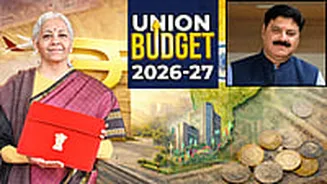

Budget Unveiled: Overview
The Union Budget 2026, a crucial document for India's financial planning, was unveiled. This budget outlines the government's proposed revenues and expenditures
for the upcoming fiscal year, presenting a comprehensive picture of the nation's economic strategy. The budget reflects the government's priorities, illustrating where funds will be allocated and the economic policies it intends to implement. The unveiling of the budget is a significant event, setting the course for economic growth, social welfare, and infrastructure development. The budget is often a reflection of the government's economic agenda, impacting various sectors such as taxation, healthcare, education, infrastructure, and social welfare programs. The budget's impact extends to both individual citizens and the overall economic landscape, influencing investments, employment, and the overall standard of living. It is a key tool for managing the country's finances, promoting economic stability, and fostering sustainable growth, making it a critical aspect of India's governance.
Taxation and Revenues
A central focus of the Union Budget 2026 is taxation, which is a key component of the government's revenue generation. Tax policies, including changes in income tax slabs, corporate tax rates, and indirect taxes like GST, are central to the budget. Alterations in these areas influence the government's fiscal capacity, as well as the spending power of individuals and businesses. The budget often introduces new tax measures, modifies existing ones, or provides tax relief to stimulate economic activity. Income tax changes directly impact the disposable income of citizens, influencing consumer spending and savings. Corporate tax reforms can affect business profitability, investment decisions, and job creation. The budget may also introduce tax incentives aimed at promoting certain sectors or activities, such as renewable energy or infrastructure development. Analyzing the tax proposals in the budget is crucial to understanding the government's strategy for generating revenue and its impact on the economy.
Spending Allocations Examined
The Union Budget 2026 outlines the government's spending plans across various sectors, which is a major area of focus. These allocations reveal the government's priorities and the direction of economic development. Key areas of expenditure include infrastructure, healthcare, education, social welfare programs, and defense. The distribution of funds among different sectors gives insight into the government's approach to economic growth and social development. The budget's allocations have implications for various sectors. Increased investment in infrastructure can boost economic activity, while higher spending on healthcare and education improves social well-being. Examining these allocations is essential to understanding the budget's broader impact. Significant budgetary allocations are often earmarked for critical infrastructure projects, such as roads, railways, and ports, which are vital for economic expansion and connectivity. Increased funding for healthcare and education sectors highlights the government's commitment to social development and public services. Furthermore, funds allocated to social welfare programs play a pivotal role in poverty reduction and social upliftment.
Economic Growth Projections
The Union Budget 2026 encompasses economic projections that are vital for gauging future trends. These projections, often including growth forecasts, inflation targets, and estimates of fiscal deficits, are critical for understanding the anticipated economic performance. Analyzing these projections provides insights into the government's outlook on the economy, informing investment decisions and economic strategies. The budget includes predictions for the GDP growth rate, which measures the overall expansion of the economy. It also addresses inflation targets, influencing monetary policy and consumer behavior. Predictions regarding the fiscal deficit, which is the difference between government spending and revenue, are also provided. These projections provide a roadmap for the economy's performance, serving as a basis for economic policy decisions. They serve as a guide for businesses, investors, and policymakers, helping them make informed choices about their financial strategies. The economic projections embedded within the budget are pivotal in shaping the nation's economic trajectory.
Sector-Specific Impacts
The Union Budget 2026 outlines sector-specific impacts. Various industries are significantly affected by the budget’s proposals. These impacts can be seen in areas like infrastructure, healthcare, technology, and agriculture. The budget can stimulate growth, affect profitability, and influence investment in each sector. Infrastructure development may receive increased funding, leading to construction projects and improvements in connectivity. Healthcare reforms could aim at improving access to medical services and healthcare infrastructure. The technology sector may benefit from investments in digital infrastructure, innovation, and skill development. Agriculture could be affected through subsidies, support for farmers, and investments in irrigation and rural development. Monitoring these sector-specific effects is crucial for stakeholders in each industry, providing a glimpse into the opportunities and challenges posed by the budget. These insights allow businesses and investors to adapt and take advantage of any opportunities that arise.