






Supermoon Explained Simply
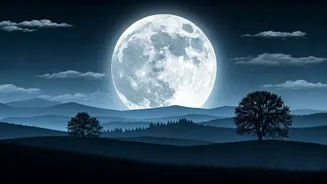
A supermoon occurs when a full moon coincides with the moon's closest approach to Earth in its orbit, a point known as perigee. Because the moon is closer
to Earth during a supermoon, it appears larger and brighter than a typical full moon. This phenomenon is a visual treat, as the moon can seem up to 14% larger and 30% brighter than a micro moon, which happens when a full moon is at its farthest point from Earth (apogee). The exact size and brightness depend on the specifics of the orbit and the distances involved at the time. Therefore, the first supermoon of 2026 is sure to be one of the best shows of the year, bringing about many photographers and stargazers.
Visibility Across India
The visibility of the supermoon will vary slightly depending on the specific location within India. Generally, the supermoon will be visible throughout the country, provided the skies are clear. Major cities like Delhi, Mumbai, Chennai, Kolkata, and Bangalore, along with smaller towns and rural areas, will be able to enjoy the spectacle. The best viewing times are usually around the time the moon rises or sets, as the moon appears largest near the horizon due to an optical illusion. To ensure the best viewing experience, check the local moonrise and moonset times for your specific location. Consider heading to areas with minimal light pollution, such as parks, open fields, or rooftops for optimal views.
Timing and Dates
To fully appreciate the supermoon, knowing the exact dates and times is crucial. The first supermoon of 2026 is expected to occur in [Insert Specific Dates and Times Here – This information is missing from the provided context]. The peak viewing time is when the moon is at its fullest phase. However, the supermoon will be visible for several days around the peak, appearing noticeably larger and brighter during this period. Keep an eye on local astronomical calendars and weather forecasts to plan your viewing accordingly. The best viewing hours are during the evening, right after sunset, or in the early morning before sunrise. The time of the rise and set depends on your specific geographic coordinates within India.
Tips for Viewing
To make the most of the supermoon experience, several viewing tips can enhance your enjoyment. Find a location away from city lights, as light pollution can diminish the visibility of the moon. Use a pair of binoculars or a telescope to get a closer look at the lunar surface and its features. However, the supermoon is easily visible with the naked eye, so specialized equipment is not required. Choose a location with an unobstructed view of the horizon. Take photographs of the supermoon using a smartphone or a camera; the larger size of the moon during this event makes for impressive pictures. Bring along a blanket or a chair to sit comfortably while you watch the supermoon grace the night sky. In fact, you can plan to attend any local public viewings.
Scientific Significance
Supermoons, while visually striking, also offer interesting insights into lunar science. They highlight the elliptical orbit of the moon around the Earth, as the varying distance between the moon and our planet causes these differences in appearance. Astronomers and scientists closely monitor supermoons to track the lunar cycle. The study of the moon and its orbit helps in understanding the gravitational forces involved in the Earth-moon system. These observations are not only fascinating but also contribute to a deeper understanding of the universe. This provides a clear picture of the celestial mechanics that drive these astronomical events and the ways in which they influence our view of the cosmos.