






Deal's Dubious Details
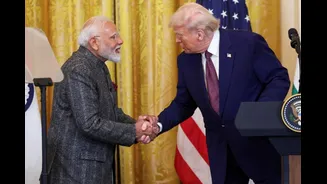
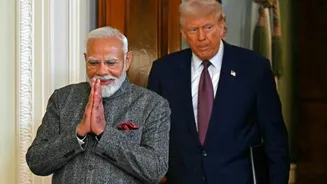
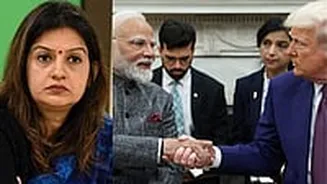
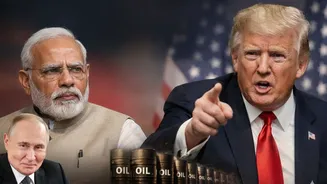
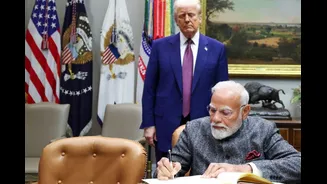
The announcement of a trade deal between the United States and India by US President Donald Trump, which included claims of India slashing tariffs on US goods
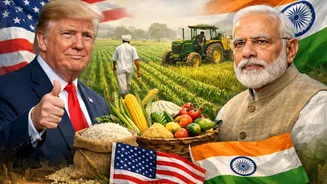
to zero and purchasing over $500 billion in various products, has been met with considerable ambiguity from the Indian side. Notably, there has been no official confirmation from Indian government officials regarding a zero-tariff commitment on US imports, nor any specific clarification on the key sectors impacted by the agreement. While the US Secretary of Agriculture expressed gratitude for the deal, highlighting agriculture as a sector India agreed to consider, Prime Minister Narendra Modi's statement only mentioned delight over a reduction in tariffs to 18%, omitting any mention of zero tariffs for US agricultural goods. This lack of explicit Indian corroboration leaves the actual scope and terms of the agricultural component of the deal uncertain, casting doubt on whether India is truly opening its vast agricultural market to US products.
India's Farm Protectionism
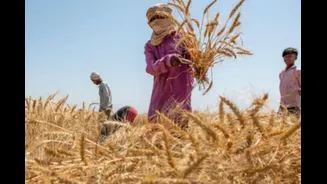
Agriculture remains a significant obstacle in US-India trade negotiations, often characterized as a persistent "loggerheads" issue due to deeply entrenched protectionist stances on both sides. India's hesitation to open its domestic market to US agricultural exports, such as corn, soybeans, dairy, and genetically modified crops, stems from a multifaceted blend of social, economic, and political considerations. New Delhi consistently prioritizes its domestic agricultural landscape, which employs nearly half of its workforce, with over 100 million small and marginal farmers depending on it for their livelihood. The average Indian farm size is small and fragmented, contrasting sharply with the large-scale, industrialized operations in the US. Allowing cheaper, heavily subsidized US imports could potentially flood the Indian market, drive down local prices, and severely impact rural incomes, leading to widespread economic distress and job losses. The dairy sector, a cornerstone for 70-80 million Indian households, is particularly vulnerable to competitive pressure from US dairy products. Furthermore, the US agricultural sector benefits from substantial government subsidies, enabling it to export products at below-market prices, a practice sometimes referred to as dumping. Indian farmers, lacking comparable support, struggle to compete fairly. This disparity is a primary reason why India maintains high tariffs and resists reductions that could expose its domestic producers to subsidized imports of commodities like wheat, rice, corn, and soybeans. The political landscape also plays a crucial role, with farmers constituting a powerful voting bloc capable of organizing significant protests, as evidenced by past large-scale agitations. Prime Minister Modi has publicly committed to safeguarding farmers' interests, even if it means higher tariffs on US goods, to avoid opposition and maintain rural support. Culturally, certain agricultural sectors, like dairy, are interwoven with traditions and community structures, adding another layer of sensitivity to market liberalization.
US Agricultural Ambitions
The United States' strong desire to increase its agricultural product sales in India is driven by compelling economic and strategic motivations. India represents a colossal and rapidly expanding consumer base, with over 1.4 billion people and one of the world's fastest-growing economies. This demographic translates into robust demand for high-quality, diverse imported foods and agricultural goods, especially as domestic production faces increasing challenges from climate change, water scarcity, soil degradation, and a migration of labor to urban centers. US officials frequently highlight India as a "massive market" for American farm produce. Another key driver is the aspiration to reduce the US agricultural trade deficit with India, which stood at around $1.3 billion in 2024. This deficit occurs because India exports more farm goods to the US (such as spices, rice, and seafood) than it imports. By boosting US exports, the aim is to narrow this gap, enhance revenue for American farmers, elevate domestic price levels for US products, and inject capital into rural American communities. Moreover, the US agricultural sector is highly productive, often bolstered by substantial government subsidies, leading to surpluses in commodities like tree nuts, cotton, soybeans, dairy, poultry, ethanol, apples, and pulses. Gaining access to the Indian market provides new avenues for these surplus goods, thereby increasing farmer incomes and aligning with national policies, particularly those focused on prioritizing American exports and fostering rural economic prosperity.
Market Access Questions
The recent trade deal announcement has also drawn scrutiny regarding its long-term implications and the methodology of its negotiation. Experts like Michael Rubin from the American Enterprise Institute have expressed skepticism, suggesting that the announced 18% tariff reduction might be the final outcome, and questioned the reciprocal nature of the agreement if India were to indeed eliminate tariffs on US goods. Concerns have also been raised about the US economy's own challenges, including inflation, which might have influenced President Trump's desire to claim a 'win' domestically, irrespective of the deal's sustained benefits. Furthermore, a long-standing trade friction point has been India's imposition of a 30% tariff on US pulses, a move India claims is to protect its domestic farmers. This has prompted calls from several US lawmakers for President Trump to negotiate its removal with New Delhi. It remains unclear whether the Indian government will lift these restrictions on US pulse crops or maintain the imposed levy. Consequently, the prospect of India truly opening its market to US agricultural goods remains uncertain. Such a liberalization could trigger significant repercussions within India, particularly for its vulnerable farming sector. Therefore, a cautious approach continues to define India's strategy concerning the liberalization of agricultural trade.