






Widespread Flight Chaos
A significant aviation crisis swept across Asia, impacting numerous countries including India, Thailand, Japan, Singapore, Indonesia, and the United Arab
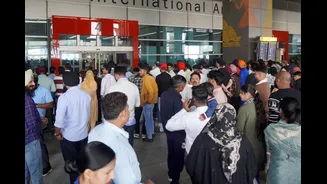
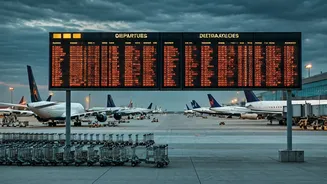
Emirates. The disruptions manifested as a substantial number of flight cancellations and delays, specifically 67 flights were cancelled and approximately 1,470 experienced delays. This resulted in lengthy queues, missed connections, and severely overcrowded airport terminals, significantly disrupting travel plans for thousands of individuals. The situation escalated from isolated incidents to a region-wide phenomenon. Data from April 12th revealed an even more extensive impact, with nearly 445 cancellations and over 3,800 delays reported across Asia and the Gulf region, affecting both domestic and international routes from Japan and China to Saudi Arabia and the UAE.
Airports Under Strain
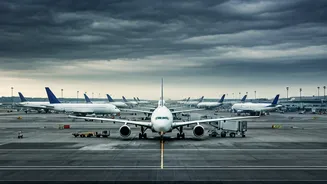
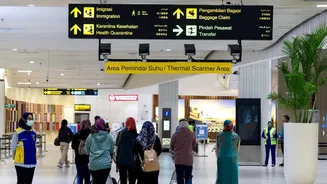
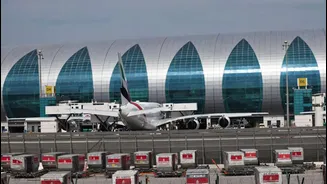
Major aviation hubs across the continent bore the brunt of this widespread disruption, transforming into congestion hotspots. Cities such as Jakarta, Tokyo, Beijing, Jeddah, and Dubai struggled with operational strain as airlines grappled with managing aircraft movements and ensuring crew availability. Passengers travelling between Asia, the Middle East, and Europe faced prolonged layovers, sudden flight rerouting, and even overnight disruptions. Soekarno-Hatta International Airport in Jakarta reported a significant number of issues, with 216 delays and 13 cancellations. Bangkok’s Suvarnabhumi Airport followed with 199 delays. In Japan, Tokyo’s Haneda Airport recorded 182 delays, while Narita International Airport saw 90 delays and 10 cancellations. Within India, Delhi’s Indira Gandhi International Airport logged 176 delays, with Mumbai and Bengaluru also experiencing considerable disruptions due to high domestic traffic volumes.
Airlines Facing Setbacks
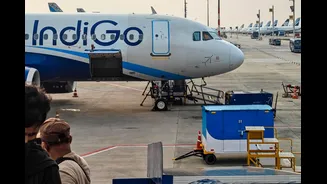
A number of airlines across various regions encountered substantial operational challenges. Among the most affected carriers were China Eastern Airlines, Batik Air, SpiceJet, and ANA Wings. Travel news outlets reported that Batik Air and United Airlines experienced the highest number of cancellations, with 10 flights each being cancelled. Indian carriers, in particular, saw a sharp increase in delayed flights; IndiGo reported 93 delayed services, and Air India logged 74 delays alongside 4 cancellations. All Nippon Airways also reported 75 delays, largely attributed to congestion issues in Tokyo. Major global airlines, including Emirates, Singapore Airlines, Thai Airways, and Lion Air, were not immune to these cascading network-wide disruptions.
Root Causes of Disruptions
The extensive travel chaos appears to stem from a confluence of several interconnected factors. High passenger volumes, coupled with operational bottlenecks at key hub airports, and persistent logistical challenges, placed immense pressure on airline networks. Further exacerbating the situation were geopolitical tensions, restrictions on airspace usage, and escalating fuel costs, all of which contributed to the difficulty in maintaining predictable flight schedules. Airports that handle dense domestic and regional traffic, particularly those in Indonesia, Thailand, Japan, and India, proved to be the most susceptible to these compounding issues.
Navigating Travel Uncertainty
Given the likelihood of continued delays and cancellations in the immediate future, travelers are strongly advised to adopt proactive strategies to mitigate potential inconveniences. It is crucial to consistently check real-time flight updates via airline mobile applications and official airport websites. Maintaining communication with airlines is essential for arranging rebookings or seeking appropriate compensation. Arriving at the airport well in advance of scheduled departure times can help reduce last-minute stress. Ensuring all travel documents are easily accessible and paying close attention to airport announcements regarding gate changes or schedule alterations are also important steps. While operations are expected to gradually normalize, the combination of high travel demand and ongoing operational hurdles suggests that disruptions may persist for some time. For passengers, staying informed and meticulous planning remain the most effective approaches to manage this period of travel uncertainty.