
Budgetary Shifts Unveiled
The budget reveals a landscape where certain sectors receive considerable boosts while others experience constraints. For instance, the Chandigarh region
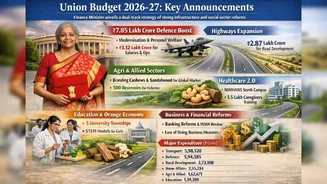
faced a reduction of Rs 437.66 crore compared to the previous year, totaling Rs 6,545.52 crore. This highlights a critical need to scrutinize these adjustments and understand the rationale behind them. Simultaneously, the focus remains on capital expenditure (capex), with a fiscal year 2027 target fixed at Rs 12.22 lakh crore. The Union government's strategy underscores a continuous investment push, setting the stage for long-term growth and infrastructure enhancements. These shifts point towards a commitment to strategic financial management, balancing current needs with future objectives. The impact of these decisions, particularly on public services, will be observed keenly.
Infrastructure Investment Thrust
The budget underscores a strong commitment to infrastructure development, with strategic allocations designed to boost key projects. The allocation of Rs 5,000 crore to establish a Pune Growth Hub and Rs 517 crore for metro extensions is a clear indication of this focus. These investments aim to catalyze economic activities, improve connectivity, and enhance urban infrastructure. Furthermore, the Ahmedabad civic body's record of developing 8.45 lakh metric tons of road infrastructure in a year demonstrates ongoing efforts. This focus aims to create efficient transportation networks and foster economic growth. Through these strategic allocations, the government seeks to lay a solid foundation for sustainable development, emphasizing the importance of infrastructure as a driver of progress.
Healthcare and Education Boost
Major initiatives in healthcare and education sectors reflect the government's commitment to social development. The Post Graduate Institute (PGI) saw the highest allocation to date, receiving Rs 2,559.65 crore, which is Rs 141.79 crore more than in 2025. This significant investment aims to bolster healthcare services and improve medical infrastructure. Additionally, the budget emphasizes educational advancements with plans for five university townships and the establishment of girls' hostels in each district. These endeavors are designed to broaden educational opportunities, especially for girls, and improve the overall learning environment. The focus on both sectors shows the government’s comprehensive approach to societal betterment, investing in both healthcare access and the quality of education.
Home Affairs & Census
The Ministry of Home Affairs (MHA) witnessed a substantial increase of 5.69% in its outlay. This boost emphasizes a strategic shift in focus towards critical areas like the Census and Intelligence Bureau (IB). The increase suggests an increased need for data collection and analysis. This strategic investment underscores the importance of data-driven governance. By bolstering these key functions, the government aims to strengthen administrative efficiency, improve policy planning, and respond more effectively to the evolving needs of the nation. This commitment demonstrates a proactive approach to strengthening internal capabilities and ensuring the effective operation of governmental bodies.
Viksit Bharat Philosophy
The government's vision of 'Viksit Bharat' is deeply rooted in the philosophy of Guru Ravidas. The focus is to transform the nation and ensure all citizens benefit from this mission. The country's commitment to this approach aims to drive inclusive growth and social progress. This vision emphasizes holistic development, highlighting the administration's resolve to create an egalitarian society. By aligning the nation's aspirations with ethical and spiritual values, the government envisions a future where every citizen contributes to India's rise. This vision underscores a comprehensive strategy to weave progress into the fabric of society.