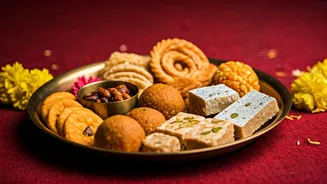

Til Ladoo: Sweet Beginning
Til Ladoo is a sweet treat, typically made with sesame seeds (til) and jaggery or sugar. The sesame seeds are roasted to bring out their nutty flavor,
and then combined with melted jaggery to form a sticky mixture. This is then shaped into small, round ladoos. Til Ladoo is considered auspicious and is often eaten on Makar Sankranti because sesame seeds and jaggery are believed to provide warmth and energy during the winter season. The sesame seeds are also associated with prosperity and good luck. The preparation method involves roasting the sesame seeds until fragrant, melting the jaggery, and mixing the two while still warm to shape the ladoos. This recipe highlights the use of fresh, high-quality ingredients, ensuring the perfect balance of sweetness and texture, which makes this dish a festive favorite.
Peanut Chikki: Crumbly Goodness
Peanut chikki is a hard, brittle candy made from peanuts and jaggery. Peanuts are dry roasted and then mixed with melted jaggery. This mixture is spread out and allowed to cool and harden, before being cut into squares or bars. Peanut chikki is a common snack during Makar Sankranti, known for its crunchy texture and sweet taste. Peanuts are a source of protein and healthy fats, while jaggery provides a natural sweetness and is rich in iron. The preparation of chikki typically includes dry roasting the peanuts, melting the jaggery until it caramelizes, and mixing them. The mixture is then poured onto a flat surface to cool and set, after which it is cut into individual pieces. This recipe emphasizes the use of fresh peanuts and quality jaggery, resulting in a perfectly balanced sweetness and crunch.
Gajak: Sesame Seed Delight
Gajak is another popular sweet treat made from sesame seeds and jaggery, similar to chikki but with a flaky texture. The sesame seeds are roasted and mixed with melted jaggery, then flattened into thin sheets or bars. Gajak is enjoyed during Makar Sankranti for its nutty flavor and sweet taste. Sesame seeds offer nutritional benefits, and jaggery provides warmth. Preparing Gajak involves roasting sesame seeds until golden brown and melting jaggery until it forms a thick consistency. These are combined and rolled out before being cut into pieces. This recipe focuses on achieving the ideal thinness and crunch, using a careful balance of ingredients for the perfect texture and flavor. Gajak's preparation methods have been passed down through generations, making it a traditional favorite during the festival.
Undhiyu: Mixed Vegetable Magic
Undhiyu is a mixed vegetable dish, which is a Gujarati specialty. It involves a variety of vegetables cooked in an earthen pot (matka) upside down over an open fire. The vegetables are seasoned with a mixture of spices and herbs. The slow cooking process allows the flavors to meld together, creating a rich and aromatic dish. It is a hearty and flavorful dish, perfect for the winter season. Preparing Undhiyu is a lengthy process involving marinating vegetables in a blend of spices. These vegetables are layered in an earthen pot along with koftas and the entire dish is cooked over low heat. It’s often served with puris and jalebis, making it a complete meal during the festival.
Gujarati Vada: Crispy Delight
Gujarati Vada is a deep-fried snack, typically made from a mixture of lentils and spices. The lentil batter is shaped into small patties and deep-fried until golden brown and crispy. Vadas are often served with chutneys, making them a delicious treat during Makar Sankranti. The recipe emphasizes the use of fresh ingredients, including freshly ground lentils and a blend of spices. Preparing Gujarati Vada includes soaking lentils, grinding them, and mixing in spices. The mixture is then deep-fried until golden brown. Crispy on the outside and soft on the inside, Gujarati Vada offers a delightful contrast of textures and flavors. It's often served with chutneys, adding to the complete taste experience.
Pongal: South Indian Staple
Pongal is a rice and lentil dish cooked with spices and often sweetened with jaggery. It is a traditional dish from South India, particularly popular during Makar Sankranti. The dish is cooked in a pot, traditionally outdoors, with the ingredients symbolizing prosperity and abundance. Pongal is a simple yet nutritious dish, symbolizing the joy and abundance of the harvest season. Preparing Pongal involves cooking rice and lentils with water and spices. Sweet Pongal, also known as Sakkarai Pongal, involves the addition of jaggery, ghee, nuts, and cardamom for a sweet variation. It is a dish that requires patience, as it's traditionally cooked until it overflows, which symbolizes abundance. This dish is prepared in temples and homes, making it an integral part of the festival celebrations.
Khichdi: Comfort Food Classic
Khichdi is a dish made from rice and lentils, seasoned with spices. It is a comforting and nutritious meal, often eaten during Makar Sankranti. It is known for its simplicity and ease of digestion, perfect for the festive season. Khichdi can be made in many ways, but the traditional version usually includes rice, lentils, turmeric, ginger, and other spices. Preparation involves cooking rice and lentils together with water and spices until soft and mushy. This dish is often served with ghee and a side of yogurt. Its simplicity makes it a favorite across India, making it a staple of the festival. The ingredients are usually very basic, making the dish accessible and easy to prepare.
Puran Poli: Sweet Flatbread
Puran Poli is a sweet flatbread, stuffed with a filling of cooked lentils, jaggery, and spices. It is a popular dish in Maharashtra and Gujarat. The flatbread is cooked on a griddle until golden brown and is often served with ghee or milk. The sweet filling provides a balance to the wholemeal exterior, making it a festive favorite. Preparing Puran Poli involves making the dough for the flatbread and preparing the filling. The filling is made by cooking lentils, jaggery, and spices. The filling is then stuffed into the dough, rolled out, and cooked on a griddle. It's commonly eaten with ghee, enhancing its flavor and making it a celebratory delight.
Dahi Vada: Yogurt Delight
Dahi Vada are lentil fritters soaked in creamy yogurt and topped with chutneys and spices. The fritters are made from a batter of soaked and ground lentils, which are then deep-fried until golden brown. Soaking them in yogurt softens the vada, enhancing their flavor. Dahi Vada provides a refreshing contrast to the sweet dishes, making it a perfect addition to the Makar Sankranti feast. Preparation includes making the vada by soaking and grinding lentils, then deep-frying them. The fritters are soaked in yogurt and topped with chutneys and spices before serving. Its creamy texture and flavorful toppings make it a much-loved dish across India.
Undhiyu with Jalebi: Sweet Combination
Undhiyu is often served with jalebi, a sweet, deep-fried dessert made from fermented batter. The combination of savory Undhiyu and sweet Jalebi provides a delightful balance of flavors. The dish is made from an elaborate mix of vegetables, cooked slowly with spices. Jalebi is made by fermenting a batter, deep-frying it in spiral shapes, and soaking it in sugar syrup. The sweet and savory combination is a staple during the celebrations, complementing the richness of Undhiyu. This recipe showcases the preparation of both Undhiyu and Jalebi, offering a complete and traditional meal. The contrasting flavors make it a popular combination during the festive period.