


The Sole Survivor
Following the ISRO PSLV failure, a single payload defied the odds and made it through the ordeal: a Spanish satellite. However, the true significance lies
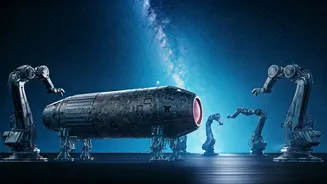
with the KID capsule. The KID capsule's mission was designed to test re-entry technologies. This capsule's survival during the launch failure offered a unique opportunity to gather data on conditions not typically accessible to engineers. This data could prove very valuable and crucial for improving the robustness of future spacecraft. The information gathered offers a deeper understanding of spacecraft behavior under unexpected conditions.
Capsule's Primary Purpose
The KID capsule was specifically designed as a testbed for re-entry technologies. Its primary mission involved evaluating how a spacecraft could withstand the harsh environment of re-entering Earth's atmosphere. The ultimate aim of the mission was for the capsule to splash down safely in the South Pacific Ocean. By simulating re-entry, the capsule provided engineers with crucial data on heat shields, aerodynamics, and structural integrity under extreme conditions. The insights gathered are pivotal for developing more reliable and safe spacecraft for future space missions. This data is particularly valuable because it reflects “off-nominal” conditions rarely available to engineers.
Launch Mishap Details
The specific details of what went wrong during the launch are critical. Understanding the failure mode of the PSLV is paramount to assessing the KID capsule's survival. Although the article does not provide a specific cause of the failure, the fact that the capsule made it through highlights its robust design. The unexpected re-entry provided a wealth of data on the capsule's ability to withstand the stresses. It also provided insight into the potential failure points of the launch vehicle itself. This post-failure data is especially valuable because it represents the kinds of challenges that future space missions may face and will enable the creation of more resilient spacecraft.
Mission's Payload Details
The PSLV-C62 mission carried the KID capsule, the Spanish satellite, and other payloads. The KID capsule was the primary payload of interest, designed to test re-entry technology. The satellite was equipped with sophisticated sensors and data-gathering equipment, which was integral to the mission's success. The combination of these payloads allowed for a comprehensive approach to testing spacecraft technology. The survival of the KID capsule and the Spanish satellite provides unique insight into what happens in a launch failure, providing invaluable data for improving the design of future spacecraft and launch systems.
Data's Significance
The data from the unexpected re-entry is particularly valuable for engineers. The unusual conditions under which the capsule survived offer a rare opportunity to study 'off-nominal' scenarios. This includes how the capsule experienced aerodynamic forces, thermal stresses, and other environmental impacts. Because this information is generally unavailable during standard, successful launches, it provides new insight into the resilience of spacecraft. This data aids engineers in designing more robust spacecraft that are able to withstand a range of unpredictable conditions and contribute to the safety and success of future missions. This mission data is critical for refining spacecraft design and optimizing performance under adverse conditions.
Next Steps Unveiled
The next steps following the KID capsule's survival involve analyzing the collected data. Engineers will meticulously examine the information to understand the performance of the capsule during re-entry and the launch failure event. They will focus on identifying areas for improvement in design, materials, and operational procedures. The data will be used to improve current models for re-entry simulations, and future tests may be designed to further validate the findings. The insights gained from the mission will guide the development of future space missions, resulting in more reliable spacecraft, as well as safer and more successful space exploration endeavors.