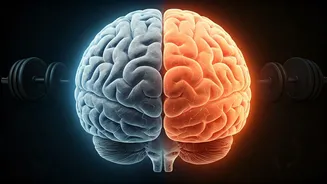







Rewinding the Brain Clock
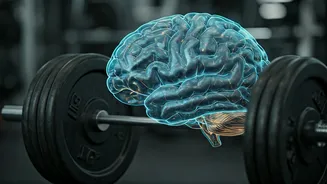
It turns out that resistance training offers a remarkable benefit beyond physical gains: it can actually turn back the clock on your brain's age. Scientific
studies indicate that engaging in consistent strength training can lead to a reduction in your predicted brain age by as much as two years. This means while the physical effects of aging might be progressing, your brain can be actively rewiring itself to maintain a more youthful and agile state. The act of lifting weights doesn't solely contribute to building stronger muscles; it fundamentally aids in keeping your mind sharp and responsive, combating the natural slowing down that often accompanies aging.
Cognitive Performance Boost
Strength training acts as a powerful enhancer for your cognitive functions, significantly improving how your brain processes information and makes decisions. Research consistently demonstrates that resistance exercises sharpen executive functions, leading to better planning abilities and more decisive decision-making. Furthermore, it bolsters working memory, allowing you to hold and manipulate more information concurrently, which is crucial for complex tasks. It also significantly improves attention span, helping you maintain focus even amidst constant distractions. In essence, incorporating weightlifting into your routine could translate to thinking faster, concentrating for extended periods, and managing intricate challenges with greater ease.
Nourishing Neural Health
The benefits of weight training extend to stimulating the release of crucial neurochemicals that are vital for brain health and function. Engaging in resistance exercise triggers the production of Brain-Derived Neurotrophic Factor (BDNF) and Insulin-like Growth Factor 1 (IGF-1). These compounds function much like a potent fertilizer for your brain, supporting the survival of neurons, promoting neuroplasticity – the brain's ability to form new connections – and maintaining the integrity of white matter. These factors are indispensable for effective learning, robust memory formation, and the brain's ongoing capacity to adapt and evolve, all of which are critical for sustained cognitive well-being over time.
Combating Brain Inflammation
Chronic inflammation within the brain is a significant contributor to cognitive decline and can subtly impair mental acuity over time. Strength training serves as an effective countermeasure against this detrimental process. Resistance exercise initiates biochemical changes within the body that help to dampen neuroinflammation, thereby offering protection against age-related cognitive deterioration and the often-debilitating effects of 'brain fog.' By mitigating this internal inflammatory state, strength training becomes an invaluable habit for preserving mental clarity and ensuring long-term neurological health.
Effective Training Strategies
To reap the substantial brain-boosting advantages of strength training, one doesn't need to commit excessive hours to the gym. Key principles for effective training include frequency, focusing on compound movements, and ensuring progressive overload. Aiming for 2-3 training sessions per week is generally sufficient to see positive results. Prioritizing compound exercises such as squats, deadlifts, rows, and presses engages multiple muscle groups and provides a more comprehensive stimulus. Crucially, workouts must remain challenging; if an exercise no longer pushes your limits, it's time to increase the weight or intensity. This principle of progressive challenge is fundamental for continued adaptation and improvement, both physically and cognitively.