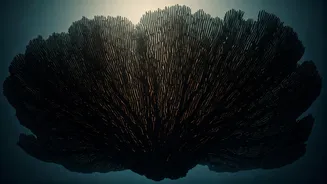

Ancient Ocean Witness
The discovery of a 300-year-old giant black coral in the deep waters of New Zealand has captivated researchers. Black corals, though often appearing pale
or white in their live form, are crucial for understanding historical oceanic conditions. These slow-growing organisms act as bio-records, providing a wealth of information about past temperatures and current levels. This is particularly valuable for scientists specializing in paleoclimatology. Identifying these corals can be tricky, sometimes requiring microscopic analysis or DNA sequencing, especially in areas with diverse coral species. The Wildlife Act 1953 protects black corals in New Zealand, making it illegal to damage, take, or possess them. Enforcement is primarily carried out through proactive monitoring by conservation authorities and reports from the community, ensuring their preservation.
Protecting Delicate Habitats
In Fiordland, New Zealand, the protection of black corals is a priority. While the area is partially covered under the New Zealand Marine Protected Areas Policy, researchers emphasize the need for enhanced protection. This involves effective enforcement, continuous monitoring, and detailed habitat mapping to safeguard these fragile ecosystems. Scientists from Victoria University, along with the Department of Conservation and Fiordland Marine Guardians, are conducting targeted surveys to identify ecologically vital zones. They are also encouraging divers and local operators to report any sightings of black corals exceeding four meters in height. This data collection helps in accurately mapping the distribution and assessing the abundance of these large coral colonies within the fiords, aiding in their conservation.
Significance and Uses
Beyond their scientific value, black corals have cultural and historical significance. In other parts of the world, such as the Pacific and Mediterranean regions, they have been used in jewelry and traditional medicine. This dual role underscores the need for their preservation, as these corals are not only essential for scientific understanding but also hold cultural importance. The longevity of black corals, with the newly discovered specimen being 300 years old, adds to their allure. This discovery enriches scientific knowledge of marine environments and spotlights the significance of conservation efforts to preserve these ancient, fascinating creatures and the ecosystems they inhabit.