




Statute of Limitations Ruled
A jury in Oakland, California, has unanimously determined that Elon Musk's lawsuit against OpenAI and its top executives was filed beyond the legally permissible
timeframe. This crucial finding means that the claims Musk brought forth, which alleged a betrayal of OpenAI's original mission to benefit humanity, are now moot due to the statute of limitations. The nine-person jury deliberated for approximately two hours before reaching this conclusion. While their verdict served in an advisory capacity, Judge Yvonne Gonzalez Rogers accepted it as the court's own ruling, leading to the dismissal of Musk's accusations. This verdict marks a significant legal setback for the tech mogul in his dispute with the AI company he co-founded, highlighting the procedural hurdle he failed to overcome.
Core Allegations Unaddressed
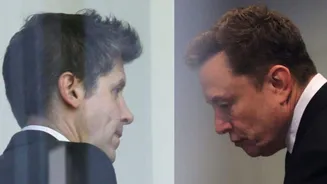
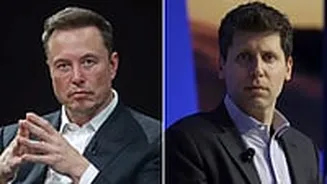
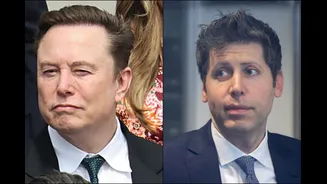
Elon Musk had accused OpenAI's CEO Sam Altman and his deputy of fundamentally altering the company's trajectory from its non-profit origins to a profit-driven entity without his knowledge. Musk asserted that this shift into a 'moneymaking mode' was a departure from the shared vision they had when OpenAI was established in 2015. He claimed this constituted a breach of charitable trust and that Altman and Brockman had unjustly enriched themselves as the company's valuation, particularly with the success of ChatGPT, skyrocketed. Musk sought financial reparations for OpenAI's charitable endeavors and the removal of Altman from the board. However, the jury's focus on the timing of the lawsuit meant these core allegations regarding the mission drift and alleged personal enrichment were not substantively adjudicated on their merits.
OpenAI's Defense and Musk's Motives
OpenAI and its leadership, including Sam Altman, countered Musk's claims by arguing that there was never a definitive promise to maintain a non-profit status in perpetuity. They suggested that Musk's lawsuit stemmed from his inability to exert unilateral control over the rapidly expanding AI developer, especially after he ceased funding the company. The trial also brought to light the contentious rift between the former collaborators, with Altman testifying that he felt abandoned by Musk, whose actions, in Altman's view, jeopardized OpenAI's mission. OpenAI's stance was that Musk's legal action was essentially an act of 'sour grapes' intended to hinder their growth and potentially bolster Musk's own competing AI venture, xAI, launched in 2023.
Trial Highlights and Key Figures
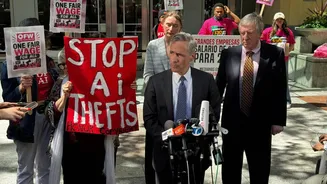
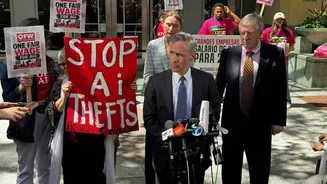
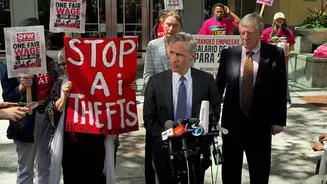
The three-week trial provided a detailed, albeit contentious, look into the early days of OpenAI and the dramatic fallout between Musk and Altman. Testimony was heard from Elon Musk himself, Sam Altman, his chief lieutenant Greg Brockman, Microsoft CEO Satya Nadella, and several former OpenAI board members, including Helen Toner and Tasha McCauley. Brockman's testimony revealed his substantial stake in OpenAI, estimated to be around $30 billion. Musk, during his time on the stand, characterized the lawsuit as a simple matter of 'not okay to steal a charity.' The proceedings also touched upon the board's controversial decision to oust Altman as CEO in 2023, a move Musk cited as evidence of deceptive conduct, though Altman was reinstated days later.