
Roadway Reduction Explained
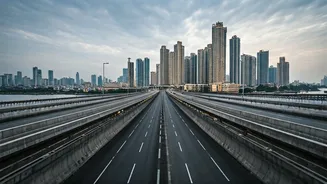
The transformation of a section of a bridge near Mumbai, India, from a four-lane structure to a two-lane configuration has generated immediate safety apprehensions.
This unexpected narrowing of the road presents an increased risk of accidents, as vehicles must rapidly merge into fewer lanes. This change has caught drivers off guard, leading to potential congestion and heightened collision possibilities. The unexpected shift in the road layout raises questions about the infrastructure's design and its capacity to handle traffic flow, creating a dangerous situation. This type of reduction may cause delays, which can lead to impatient drivers attempting risky maneuvers.
MMRDA's Response & Safety
In response to the growing concerns, the Mumbai Metropolitan Region Development Authority (MMRDA) has rejected any claims of a design flaw. The authority maintained the structure's safety and effectiveness. However, the unexpected narrowing of the lanes necessitates a careful evaluation of the bridge's capacity to accommodate traffic and avoid accidents. The MMRDA's stance suggests a focus on the immediate management of the situation rather than acknowledging structural issues. The focus remains on reassuring the public. It is essential to ensure that the infrastructure is well-maintained to maintain safety standards. The situation highlights the critical need for a thorough investigation of the bridge's design and current traffic patterns to ensure the safety of all commuters.
Impacts on Commuters
The lane reduction has direct implications for the thousands of commuters who use the bridge daily. The sudden narrowing of lanes can cause congestion. The merging of two lanes into one increases the chances of rear-end collisions and side-swiping accidents. Commuters are now forced to exercise extra caution. There is a need for drivers to anticipate the unexpected layout. The current layout has added stress to the daily commute, increasing travel times. Drivers may need to adjust their driving behavior. It is essential that they are prepared to deal with sudden slowdowns or stops. Commuters’ safety is very important. Therefore, it is critical that authorities take appropriate steps to mitigate the risks associated with the lane reduction.
Design and Engineering Concerns
The unexpected narrowing of the bridge from four lanes to two raises fundamental questions about the design and engineering principles employed. The design must accommodate the volume of traffic to ensure safety and prevent accidents. The sudden reduction suggests that the design may not be optimal for the expected traffic volume, potentially leading to increased congestion. This narrowing could be a result of various factors. This includes inadequate initial planning or unexpected changes in traffic patterns. Further investigation should reveal the reasons behind the alteration. The MMRDA's assertion that there is no design flaw should be supported by a thorough and transparent evaluation. The engineering community and the public must ensure that safety is the top priority.
Next Steps: Mitigation Measures
To address the safety concerns and mitigate the risks, several immediate measures may be necessary. Firstly, the implementation of clear and effective signage is essential to alert drivers well in advance of the lane reduction. This will give drivers enough time to adjust to the change and merge safely. Secondly, strict enforcement of speed limits in the affected area can help minimize the potential for accidents. Increased police presence and the use of speed cameras can encourage safer driving. Thirdly, it may be necessary to implement traffic management strategies. These strategies may involve rerouting vehicles or adjusting traffic flow during peak hours to ease congestion. All these mitigation measures should be implemented to ensure the safety and well-being of the commuters.