
Countdown Commences
On Saturday, NASA initiated a two-day practice countdown leading up to the fuelling of its new moon rocket. This simulation is a vital test to determine
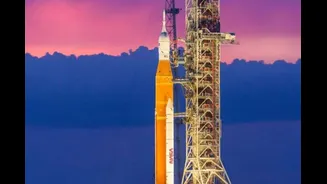
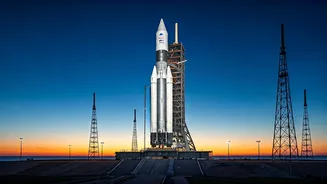
if the rocket can successfully carry four astronauts to the Moon. The countdown began at 8:13 pm EST (6:43 am Indian time), 40 minutes before the opening of a simulated launch window at 9 pm EST on February 2. This test is projected to continue until approximately 1 am on Wednesday, February 3 (11:30 am IST). The purpose of the test is to evaluate the launch team and the supporting teams located in the Mission Control Center at NASA’s Johnson Space Center in Houston, along with other NASA centers. The simulation includes loading cryogenic liquid propellant into the Space Launch System (SLS) rocket’s tanks, a launch countdown, the ability to reset the countdown clock, and draining the tanks to practice procedures if a launch is aborted. The launch is scheduled from Launch Complex 39B at NASA’s Kennedy Space Centre in Florida, with the crew of four astronauts embarking on an approximate 10-day mission.
Crew & Mission Scope
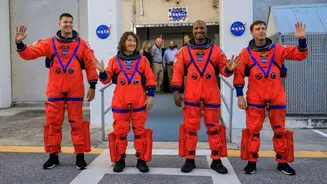
The Artemis II mission is set to be the first crewed lunar launch since 1972, with the crew, which includes Commander Reid Wiseman, Pilot Victor Glover, mission specialist Christina Koch, and mission specialist Jeremy Hansen from the Canadian Space Agency, ready for the voyage. The astronauts, along with the US and Canadian teams, will orbit the Moon and then return straight back without stopping until splashdown in the Pacific Ocean. The service module of the spacecraft will send the astronauts on an outbound trip of about four days, taking them around the far side of the Moon, over 230,000 miles from the Earth. The mission's anticipated duration is nearly 10 days, involving a high-speed, high-temperature reentry through Earth’s atmosphere. The crew remains in quarantine in Houston, with precautions such as heaters at the top of the Orion capsule and purging systems configured for colder weather to maintain proper conditions. The test ensures that the US capabilities are verified for humans to explore deep space.
Preparations & Testing
NASA's preparation includes a critical fueling test, with February 8th as the earliest launch window, contingent on a successful fuelling demonstration. The 322-foot (98-meter) Space Launch System rocket had been moved to the pad two weeks prior. The Artemis II closeout crew practiced their closeout operations, which included closing the Orion crew module and launch abort system hatches. The agency's official announcement included teams fueling the rocket and running a full range of operations to ensure everything is ready for the crewed launch around the Moon. NASA officials are also coordinating the mission with the upcoming launch to the International Space Station, hoping it will happen within days of a potential Artemis II launch. The Artemis program follows in the footsteps of the Apollo program, which sent 24 astronauts to the Moon between 1968 and 1972, with twelve of them walking on the lunar surface.