






FTA: Game Changer?
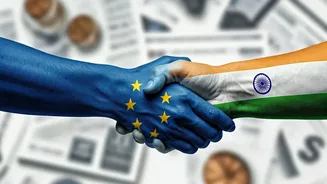
The India-EU Free Trade Agreement has been hailed by Indian officials as a transformative deal. Piyush Goyal expressed optimism, envisioning its implementation
by 2026. This pact is expected to redefine global power structures through enhanced trade and defense ties. The agreement's significance arises against a backdrop of global uncertainty, solidifying the idea of a 'double engine' approach to prosperity led by PM Modi. The FTA underscores a commitment to mutual growth and strategic alignment. Furthermore, the agreement marks a crucial step in fostering stronger, more resilient relationships amidst an evolving global landscape. The emphasis is on long-term benefits and collaborative advancement.
Key Agreement Benefits
The FTA between India and the EU is poised to deliver multifaceted advantages. Increased trade volumes are anticipated, stimulating economic expansion for both India and the EU. Simultaneously, the agreement is expected to bolster defense ties, leading to collaborative initiatives in technology, research, and joint military exercises. This strengthened partnership is a strategic move, aligning with shared values and interests. The focus is on predictability, which is a major advantage for facilitating long-term economic planning and investment. The convergence of India and the EU marks a potent alliance in a world marked by global volatility. The agreement demonstrates a proactive approach towards forging robust, mutually beneficial international partnerships.
Global Uncertainty Context
The India-EU FTA holds particular significance when set against a backdrop of global instability. In a world marked by geopolitical tensions, the agreement projects a beacon of collaboration and shared prosperity. EU High Representative for Foreign Affairs and Security Policy Kaja Kallas has highlighted the importance of 'predictability' that the FTA provides. This consistency becomes a valuable asset for businesses and governments. The deal reinforces the significance of diplomacy and multilateralism, which are essential for navigating current international challenges. The agreement underlines the potential of collaborative partnerships to deliver stability and economic progress, thus becoming more important than ever. The FTA reflects a strategic vision for bolstering resilience and promoting peace.