
The Crucial Third Stage
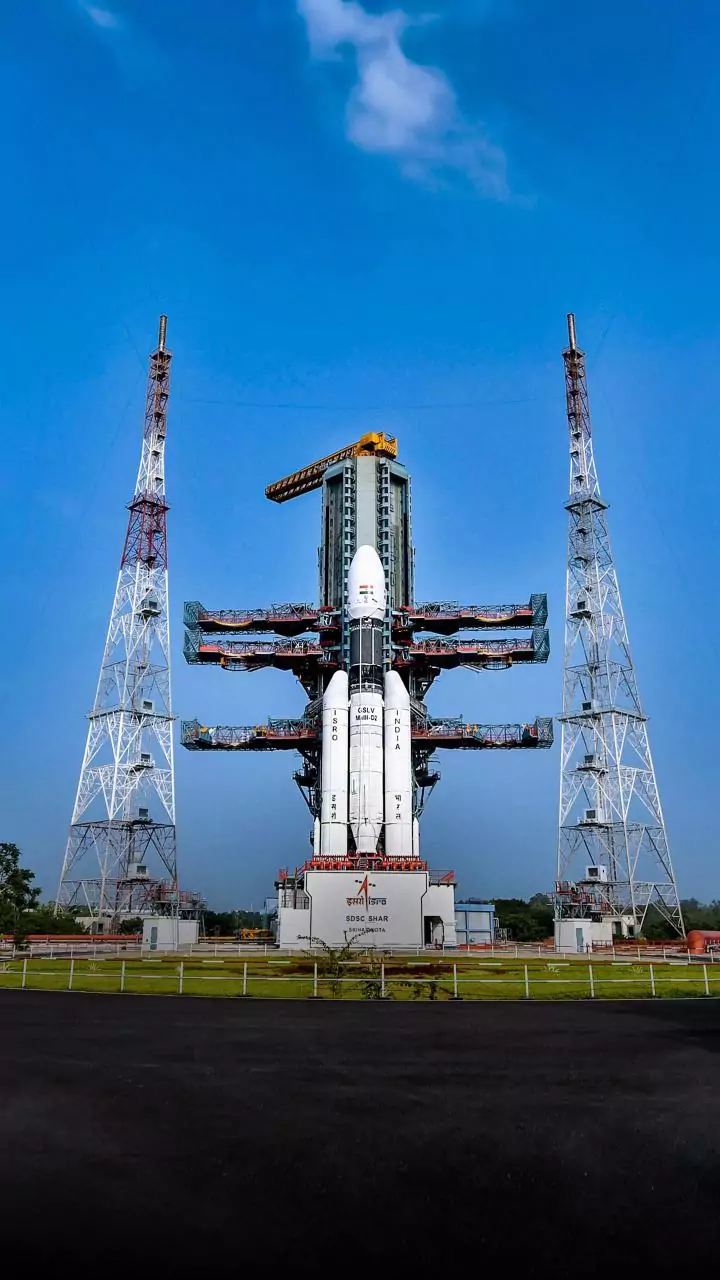
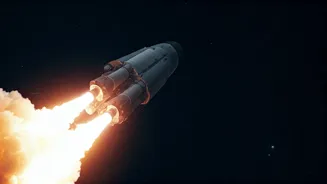
The third stage is the final step in propelling a satellite into its designated orbit, and often represents the most challenging segment of a rocket launch.
After the initial stages that provide the main thrust and escape Earth's atmosphere, the third stage, generally powered by a cryogenic engine, fine-tunes the satellite's journey. It's tasked with achieving the exact velocity and altitude required for the satellite's mission, such as positioning a communication satellite or launching a weather monitoring device. This stage must perform flawlessly. Its primary duty is precision. Any minor deviation can result in mission failure or orbital inefficiencies, making it an essential element for ISRO's ambitions in space exploration and satellite deployment.
Cryogenic Engine Complexity
The third stage usually features a cryogenic engine. These engines, employing liquid hydrogen and liquid oxygen as propellants, are powerful and efficient but also inherently complex. Handling these propellants is technically demanding. Liquid hydrogen, for instance, requires storage at extremely low temperatures, close to absolute zero, and is extremely volatile. The engine's design must account for the expansion and contraction of the materials due to these extreme temperature changes. Ignition of these engines at the high altitudes of the third stage also presents difficulties. The lack of atmospheric pressure makes the ignition process very different from what takes place on the ground, demanding robust ignition systems and precise control. Any failure here would immediately threaten a mission, making cryogenic engine expertise a core capability for ISRO.
Precise Velocity Control
Achieving the correct velocity is critical during the third stage; this is where the rocket must accelerate the satellite to the precise speed needed to stay in its intended orbit. This is not simply a matter of reaching a certain speed; it also involves controlling the speed change at exact times. This requires meticulous calculations that involve factors such as the rocket's position, the satellite's target orbit, and the Earth's gravitational pull. ISRO engineers utilize sophisticated guidance and control systems to constantly monitor and adjust the engine's thrust. These systems provide the information needed for real-time control to ensure the satellite reaches the correct orbital velocity. Even minor inaccuracies in the final velocity can lead to significant problems, such as a satellite ending up in the wrong orbit, or even re-entering the Earth's atmosphere.
Altitude and Orbit Insertion
Alongside velocity, the altitude at which the satellite is deployed is equally crucial. The third stage's engines must perform maneuvers to place the satellite at the right height above the Earth's surface and in the correct orbital path. This frequently involves multiple engine burns and sophisticated maneuvers to fine-tune the satellite's position. The process takes skill and precision. The exact orbital parameters differ depending on the satellite's purpose. For example, a communications satellite might need a geostationary orbit, staying above a specific point on Earth, whereas an earth-observation satellite might need a lower orbit for detailed imagery. The third stage's ability to execute these precise orbital insertions is directly linked to the success of the mission and the efficiency with which the satellite can achieve its objectives.
Challenges in Space
Operating in space presents many challenges during the third stage. There is the challenge of extreme temperatures; as the rocket ascends, it encounters intense heat during atmospheric re-entry and then the freezing cold of space. The rocket and satellite must survive these extremes. The vacuum of space also causes problems for rocket systems. Without air, heat dissipation becomes difficult. Engineers must ensure components do not overheat. Moreover, space contains radiation, which can affect the electronics in the rocket and the satellite. Shielding these components to protect them from radiation is very crucial. These environmental elements add to the complexity of the third stage and emphasize the need for robust design, testing, and operational planning at ISRO.
Ongoing Developments at ISRO
ISRO continues to invest in the technology and expertise required to overcome the difficulties associated with the third stage. Significant efforts are underway to improve cryogenic engine performance and reliability, including testing new propellant combinations and enhancing engine designs to deliver more power and greater efficiency. Innovations in guidance, navigation, and control systems are also being worked on to improve the precision of orbital insertions, which results in more accurate satellite placement. ISRO also focuses on designing more robust spacecraft that are more resistant to the harsh environment of space. These efforts showcase ISRO's commitment to advancing its space program and strengthening its capabilities in satellite launches and space exploration.