




French Onion Soup
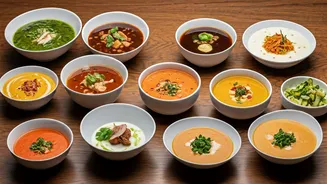
Beginning our global soup tour, we arrive in France to experience the comforting embrace of French Onion Soup. This classic features caramelized onions,
beef broth, and a topping of crusty bread and melted cheese. The onions are cooked slowly, releasing their natural sweetness, which beautifully complements the savory broth. Originating in France, this soup wasn't always a luxurious dish. In its early days, it was a peasant's meal, made with simple ingredients readily available. The bread and cheese were added to make it more filling, transforming it into the iconic dish we know today. Its simplicity belies its depth of flavor, making it a beloved choice worldwide. The richness of the broth, the sweetness of the onions, and the gooey cheese create a symphony of flavors that will warm your soul.
Tom Yum Soup
Next, we travel to Thailand for a taste of Tom Yum Soup. This vibrant soup is known for its aromatic blend of lemongrass, galangal, kaffir lime leaves, chilies, and lime juice. Often containing shrimp, mushrooms, and other vegetables, Tom Yum offers a complex flavor profile that balances sour, spicy, salty, and sweet notes. This balance is key to its appeal. The combination of fresh herbs and spices gives Tom Yum its distinctive aroma. The fiery kick from chilies is tempered by the sourness of lime and the sweetness of the broth. The variety of ingredients allows for customization, and the balance of flavors makes each bowl a unique experience. Tom Yum is not just a dish; it's a sensory journey that represents Thai culinary excellence and artistry.
Minestrone Soup
In Italy, Minestrone Soup offers a hearty and satisfying culinary experience. This vegetable-rich soup varies in recipe depending on the region and season but generally includes beans, pasta, and fresh vegetables like tomatoes, carrots, and celery. The word "minestrone" comes from the Italian word "minestra," which refers to a soup or stew. Its origins are humble, born from the practice of utilizing whatever vegetables were in season. This means no two bowls are identical. The beauty of minestrone lies in its versatility. You can use different beans, pasta shapes, and vegetables. It's often thickened with a bit of the pasta cooking water, contributing to a wonderfully rustic texture. A drizzle of olive oil, a sprinkle of Parmesan cheese, and you have a bowl of comforting deliciousness.
Ramen
From Italy, we head to Japan to experience the delight of Ramen. It’s far more than just noodles in broth; ramen is a cultural icon. It comprises wheat-based noodles, a flavorful broth (often made with pork or chicken), and toppings like chashu pork, marinated eggs, and seaweed. Ramen’s history is rich and varied. While it’s commonly associated with Japan, its roots trace back to China. It has evolved throughout the years, adapted to regional tastes, and become a beloved staple. The key to a good ramen is the broth. It takes hours of slow simmering to develop the complex flavors. The toppings add layers of texture and taste. The variety in ramen reflects the diversity of Japan, with countless regional variations, each with its unique character.
Gazpacho
Our next destination is Spain, where we find Gazpacho. This cold soup is the perfect way to cool off on a hot day. It is made primarily from raw vegetables like tomatoes, cucumbers, peppers, and onions, blended together and seasoned with olive oil, vinegar, and sometimes garlic. Gazpacho's origins are deeply rooted in Andalusian cuisine, where it was initially a simple peasant food made with stale bread, water, and olive oil. Over time, it evolved to incorporate fresh, seasonal ingredients, becoming the refreshing dish we know today. Its simplicity allows the natural flavors of the vegetables to shine. The chilled soup is both hydrating and nourishing, providing a light yet flavorful meal that highlights the best of Spanish produce.
Pho
Moving on to Vietnam, we discover Pho. This flavorful soup is a national dish and a source of national pride. Pho features rice noodles, a rich broth (typically made from beef or chicken bones), and various herbs and spices. It's often served with thinly sliced meat, bean sprouts, and a squeeze of lime. Pho’s evolution mirrors the cultural exchange. It is influenced by both French colonial cuisine and local culinary traditions. The broth is the heart of Pho. It simmers for hours to extract maximum flavor. The freshness of the herbs and the zing of the lime cut through the richness of the broth, creating a harmonious blend of flavors. Pho is more than just food; it’s an experience, a ritual, and a comforting taste of Vietnamese culture.
Borscht
Traveling to Eastern Europe, we are greeted by Borscht. Originating in Ukraine, this vibrant soup's most defining ingredient is beets, giving it its characteristic red color. Borscht also includes vegetables like cabbage, potatoes, and carrots. It's often served with a dollop of sour cream. The origins of borscht are rooted in the Slavic cultures of Eastern Europe. Its ingredients would have been easily accessible during harsh winters. The beetroots not only lend the soup its color but also a unique sweetness. There are numerous variations, with some featuring meat like beef or pork, while others are vegetarian. Borscht represents a culinary tradition, reflecting the resourceful and hearty nature of its people. Its deep, earthy flavor and vibrant color make it a comforting dish for any season.
Lentil Soup
Venturing into the Middle East and the Mediterranean, we encounter Lentil Soup. This versatile soup is a staple in many cultures. It is typically made with lentils, vegetables, and aromatic spices. Lentil Soup provides a hearty and nourishing meal, offering protein and fiber. Lentils have been a dietary staple for thousands of years. Their availability and nutritional value made them a key ingredient in many cuisines. The recipes vary greatly by region, with some incorporating tomatoes, cumin, or coriander. Whether it’s thick and chunky or smooth and creamy, lentil soup offers a satisfying meal. It’s a testament to the power of simple ingredients. It’s a reminder that good food can be both nutritious and delicious.
Miso Soup
Back in Japan, Miso Soup makes another appearance. This simple yet profound soup is a cornerstone of Japanese cuisine, centered on miso paste. Miso, a fermented soybean paste, lends a complex umami flavor to the broth. The soup often includes tofu, seaweed, and green onions. Miso soup represents centuries of Japanese culinary traditions. It’s often served as a part of a traditional breakfast or dinner. Its origins are rooted in the ancient practice of preserving food through fermentation. The miso paste, carefully crafted, forms the base of the soup, offering layers of flavor. The additional ingredients add texture and enhance the nutritional value, making miso soup a balanced and comforting choice. This is another example of a dish that combines simplicity with a depth of flavor.
Chicken Noodle Soup
Finally, we end our soup tour with Chicken Noodle Soup. A global comfort food, this soup is universally loved and is often associated with healing and home. Chicken broth, noodles, and chicken pieces form the core. Chicken Noodle Soup’s popularity is universal. It transcends cultural boundaries. Every culture has its own version. Whether it's made from scratch with a family recipe or using store-bought ingredients, it's a dish tied to feelings of warmth and care. The warmth of the broth, the tender chicken, and the comforting noodles provide a balm for the body and soul. Its simplicity belies its powerful effect. It's a reminder of the simple joys in life and the power of food to soothe and nourish.