



Puffed Rice Delights
Before convenience stores lined train stations, puffed rice, or murmura, and its spiced variations like chivda, stood as the ultimate lightweight travel
companion. Families and local vendors would meticulously prepare large batches, infusing the airy puffed rice with a medley of ingredients such as roasted peanuts, savory lentils, fragrant curry leaves, and a zesty hint of lime or salt. What made this snack so exceptionally practical was its remarkable adaptability, easily blending with regional tastes and seasonal availability. Travelers could effortlessly elevate the flavor profile by adding fresh ingredients like chopped onions, fiery green chilies, or grated coconut, transforming a simple base into a surprisingly satisfying and customizable treat. Its inherent lightness, due to its aerated nature, made it ideal for extended journeys, providing a quick and crunchy solution to hunger pangs. Moreover, puffed rice possessed a forgiving quality; while a bit of moisture might soften it, it wouldn't readily spoil, allowing portions to be replenished from a communal tin, ensuring sustenance throughout the entire voyage.
Resilient Khakhra
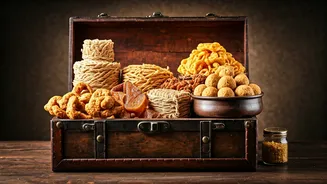
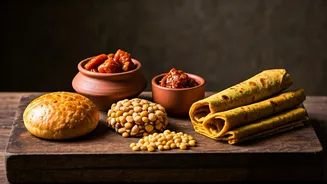
Hailing from the western regions of India, khakhra emerged as a champion of long-haul travel. This exceptionally thin, roasted flatbread is essentially a dried roti, meticulously crafted from whole-wheat dough rolled to an almost paper-like thinness and then expertly roasted over a dry flame until achieving a delightful crispness. Its inherent structure made it remarkably resistant to moisture and physical damage, ensuring it arrived intact. Families would painstakingly layer multiple khakhras, often separating them with layers of cloth to prevent breakage, and sometimes smear them with a touch of ghee for added flavor and preservation. These versatile discs could be enjoyed on their own, paired with sweet jaggery, or complemented by a tangy dab of pickle. The combination of their extended shelf life and minimal weight rendered them perfectly suited for daytime travel, offering a practical alternative when hot meals were not feasible.
Sweet Thekua & Laddoos
Across various Indian regions, sweet, baked, or fried treats like thekua and an assortment of laddoos (crafted from ingredients such as gram flour, sesame seeds, or coconut) were cherished travel classics. The high sugar or jaggery content within these confections served as a natural preservative, while their dense, dry texture ensured they would not easily crumble into a mess. Many households would prepare these goodies well in advance, carefully wrapping them in leaves or paper. They often employed ghee and toasted flours as part of a rudimentary preservation technique to reduce moisture content. These dense delights provided a rapid infusion of energy, could remain edible for several days, and even served as celebratory snacks if journeys happened to coincide with important festivals or visits, adding a touch of festivity to the voyage.
Sattu & Roasted Gram
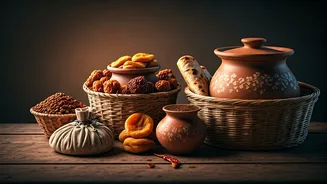
For centuries, sattu, derived from roasted gram flour, along with whole roasted chana (chickpeas) and peanuts, provided a vital source of protein for travellers on the move. Sattu could be conveniently transported as a flour and rehydrated with water or buttermilk at rest stops, creating a fortifying beverage. Roasted chana and peanuts, requiring no preparation at all, offered a steady release of energy. In regions of central and eastern India, travellers often carried small earthen pots filled with sattu, which they would mix with sour yogurt or jaggery to form a filling and cooling meal that was far more durable than fresh pulses. These simple, yet potent, snacks were the epitome of practical nutrition for arduous journeys.
Aam Papad & Dried Fruits
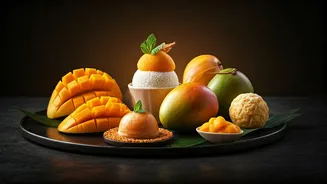
Concentrated fruit, in the form of sun-dried mango leather (aam papad) and other preserved fruits, transformed into thin, flexible sheets that were remarkably easy to transport. Similarly, dried bananas, mangoes, and other fruits had their moisture content drastically reduced, a crucial step in preventing spoilage, while simultaneously concentrating their natural sugars for an immediate energy boost. In numerous areas, these dried fruits were prepared during the peak of the harvest season when fruits were plentiful and the sun was reliable. This slow drying process not only extended their shelf life significantly but also intensified their flavors, turning abundant seasonal produce into compact, travel-ready sustenance. These delightful snacks were often secured in waxed paper or banana leaves and tucked away in the center of luggage bundles to keep them dry and protected, offering a sweet and tangy contrast to the savory provisions.
Preserved Pickles & Chutneys
A humble jar of achar, or pickle, possessed the remarkable ability to transform otherwise bland food staples into a truly satisfying meal. Pickles, meticulously prepared using oil, salt, and acidic agents such as vinegar or raw mango, served a dual purpose as both a potent flavoring agent and an effective preservative. Similarly, fruit and vegetable preserves, packed in oil or thick sugar syrups, were engineered to withstand extreme heat and prolonged periods of travel. These preserves were compact, packed with intense flavor, and could expertly mask the staleness of breads or rice, a crucial advantage when access to a hot, freshly prepared meal was simply not an option. They were an indispensable element of any well-stocked travel kit.