



Nighttime's Blue Fire
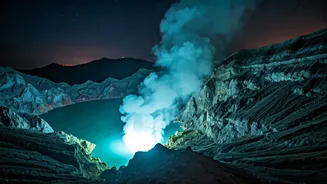
Forget the typical fiery red glow of volcanoes; Kawah Ijen offers a vision straight out of science fiction after dark. As the sun sets, the crater transforms,
revealing streaks of intense, almost neon blue light that dance through the night. This isn't the molten rock we usually associate with volcanic eruptions. Instead, the illusion of 'blue lava' is created by a unique chemical reaction. Deep within the earth, Kawah Ijen vents vast quantities of gas rich in sulfur. This gas, exiting through fissures in the volcano's crust, is exceptionally hot, often exceeding 600 degrees Celsius. When this superheated, sulfurous gas encounters the oxygen in the atmosphere, it ignites, producing flames that burn a distinct, electric blue hue. The darkness of night amplifies this phenomenon, making the burning gas appear to flow and flicker like a surreal, blue liquid cascading down the volcanic slopes. It’s a breathtaking and unexpected display that completely redefines the concept of a volcanic eruption, offering a visual experience unlike any other.
Day vs. Night Transformation
The dramatic transformation of Kawah Ijen from day to night is one of its most captivating aspects. During daylight hours, the volcanic crater presents a more subdued, almost deceptive appearance. The striking blue flames are largely imperceptible under the sun's glare, and the landscape itself seems like a typical, rugged volcanic terrain – dusty and unremarkable. There are no outward signs hinting at the extraordinary spectacle that unfolds after sunset. However, once dusk settles, the entire environment undergoes a radical metamorphosis. The darkness allows the vivid blue combustion of sulfurous gases to become the dominant feature, painting the landscape with an ethereal glow. This stark contrast between the volcano's mundane daytime facade and its astonishing nighttime illumination underscores the dynamic and surprising nature of this geological wonder, turning an ordinary-looking crater into a scene reminiscent of an alien world.
Turquoise Lake & Miners
Beyond the mesmerizing blue flames, Kawah Ijen harbors another striking natural feature: a vast, highly acidic lake situated at its core. This crater lake is renowned for its vivid turquoise color, a hue that, while visually arresting, belies its dangerous composition. The water is intensely corrosive, posing significant risks to anyone who comes into contact with it. Compounding the surreal beauty and inherent danger of this environment is the presence of human endeavor. Dedicated miners brave these challenging conditions daily. They descend into the crater, manually break off chunks of solid sulfur, and then carry heavy loads of this mineral back up the steep inclines. This arduous and hazardous work is performed without the aid of modern machinery, relying solely on physical strength and resilience. The stark contrast between the otherworldly blue fires and the raw, human labor involved in extracting sulfur creates a profound and lasting impression, highlighting the resilience of individuals in one of the planet's most extreme settings.
Nature's Unpredictable Art
Kawah Ijen's unique characteristics serve as a powerful reminder that nature's artistry often defies our preconceived notions. It challenges the conventional image of a volcano, replacing the expected eruption of red-hot lava with an unexpected display of electric blue flames. This phenomenon is a testament to the Earth's capacity for surprise, showcasing processes that are both scientifically fascinating and visually stunning. The memory of witnessing such an unusual natural event, even if experienced indirectly through media, tends to linger. It broadens our understanding of geological processes and the sheer diversity of the natural world, demonstrating that beauty and wonder can emerge from the most unexpected and extreme environments, proving that our planet holds wonders far beyond our imagination.