






An Unconventional Celebration
In an unusual display of foresight and a desire to preemptively address potential financial strains on relatives, Rakesh Yadav, a 64-year-old from Lakshmanpur
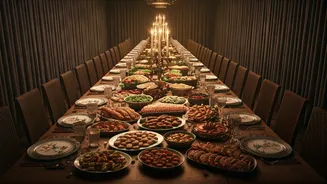
village in Uttar Pradesh's Auraiya district, orchestrated a 'terahvi' feast while he was very much alive. This departure from the customary post-death observance, typically held on the thirteenth day, saw an astounding gathering of 1,900 individuals from his village and neighboring areas. Yadav's decision was rooted in a deeply personal sentiment: he confessed to locals a yearning to combat the gnawing effects of loneliness and, more significantly, a suspicion that his kin might forgo the traditional ritual due to financial hardships. To ensure no one felt burdened or compelled to attend out of obligation, he took the initiative to host the grand event himself, using his savings from his old-age pension.
Reasons Behind the Feast
Yadav's choice to host his own 'terahvi' was driven by a confluence of personal circumstances and a thoughtful consideration for his relatives. As a bachelor, he harbored apprehensions about his care in old age, a concern amplified by the absence of immediate family to rely on. His decision, while sparking considerable discussion within the village, was clarified by Yadav as purely a celebratory meal, devoid of any religious solemnities or 'pind daan' ceremonies. He expressed a long-held desire to be honored with a feast during his lifetime, having frequently attended such events for others in the village. To formalize his unique celebration, he even had personalized invitation cards printed and distributed, which candidly stated, "Invitation for a living 'terahvi'. I am alone, with no one for me. I am fortunate to hold my 'bhandara while alive". The card also bore a poignant couplet reflecting personal sentiments of betrayal and hardship.
Family Background and Support
The man's family history adds a layer of understanding to his unusual decision. Yadav's two brothers, Chandrapal and Naresh Yadav, are deceased. Chandrapal succumbed after a prolonged illness, while Naresh was a victim of murder. Notably, neither of the brothers was married, and they have a married sister. This limited immediate family structure likely contributed to Yadav's feelings of isolation and his concerns about old-age support. Further illustrating his humble circumstances, Yadav mentioned having donated his ancestral home to a relative, opting to reside in a simple hut himself. Despite these personal challenges, he was able to organize the large-scale feast through his personal savings, supplemented by his old-age pension, demonstrating his resourcefulness.
Village Reaction and Attendance
The arrival of the printed invitation cards left the villagers in a state of bewilderment. Anuj, a local resident, admitted that upon receiving the invitation, many initially suspected it was either a printing error or a jest, given that Rakesh Yadav was visibly alive and active within the village. The novelty of a 'living terahvi' was unprecedented, creating a buzz of surprise and curiosity. Despite their initial astonishment, many villagers chose to attend the event out of respect for Yadav's feelings and to honor his unique gesture. They offered prayers for his long life, acknowledging the emotional depth behind his unconventional act. The event, therefore, transcended mere tradition, becoming a testament to community spirit and empathy.