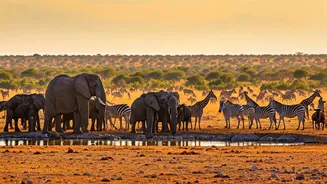









Serengeti Migration
The Serengeti National Park and the Maasai Mara National Reserve, straddling Tanzania and Kenya, host one of the most iconic animal gatherings: the Great
Migration. Millions of wildebeest, zebras, and gazelles embark on a seasonal journey in search of fresh grazing lands and water. This awe-inspiring spectacle is driven by rainfall patterns, with the herds constantly moving to areas with available resources. The migration's sheer scale is staggering; it shapes the ecosystem, influencing predator-prey dynamics and enriching the soil. Witnessing this event provides a profound understanding of nature's rhythm and the interconnectedness of life in the African savanna. The timing of the migration varies annually, but it typically follows a clockwise route, impacting the landscapes it crosses, a constant interplay between life and survival within the Serengeti-Mara ecosystem. The constant movement of these animals plays a major role in influencing the vegetation.
Chiloe Island Whales
Off the coast of Chile's Chiloe Island, a different kind of gathering occurs, with humpback whales congregating in large numbers. During the austral summer, these majestic creatures migrate from their Antarctic feeding grounds to breed and socialize in warmer waters. The waters around Chiloe offer ideal conditions, with an abundance of food and protected bays. The whales engage in various behaviors, including breaching, tail-slapping, and singing, creating an immersive spectacle for observers. Scientists study these gatherings to monitor whale populations, understand their communication, and assess their health. This location is a critical habitat for humpbacks, emphasizing the importance of conservation efforts to protect these marine giants and their fragile environment. These whales often travel thousands of miles, showcasing their resilience and navigating the vast ocean for survival.
Monarch Butterfly Migration
In the oyamel fir forests of central Mexico, millions of monarch butterflies converge each winter, creating a vibrant display of color. These butterflies travel thousands of miles from across North America to escape the harsh winter conditions. They cluster together on trees, forming massive colonies that transform the forest into an orange and black wonderland. This gathering is a vital part of the monarch's lifecycle. It is a testament to their incredible navigational abilities and resilience. Conservation efforts are crucial to protect the monarch's habitat, ensuring that this spectacular migration continues for future generations. The monarchs' journey symbolizes the interconnectedness of ecosystems across continents and emphasizes the role of individuals in conservation.
Galapagos Islands Wildlife
The Galapagos Islands, a volcanic archipelago off the coast of Ecuador, is home to a unique array of species, many found nowhere else on earth. The islands provide opportunities for viewing sea lions, marine iguanas, giant tortoises, and various bird species. Each island offers unique environments, supporting different animal populations. The Galapagos Islands provide scientists a unique living laboratory for studying evolution, as they have been a key location for understanding natural selection. Strict conservation measures are in place to preserve the delicate balance of this unique ecosystem. Observing the wildlife of the Galapagos is a chance to witness the beauty of adaptation and the fragility of ecosystems, and understand how unique the animal life there is.
Okavango Delta Elephants
Botswana's Okavango Delta, a vast inland river delta, provides a haven for a large elephant population. During the dry season, when water sources become scarce, elephants gather in the delta, seeking sustenance and refuge. This migration often includes family groups and herds, creating a remarkable display of elephant behavior and social dynamics. The Delta's lush environment offers critical resources, with its varied terrain, acting as a crucial sanctuary. Conservation initiatives help to protect the elephants and their habitat from threats such as poaching and human-wildlife conflict. Observing elephants in the Okavango Delta offers a glimpse into their social complexities, intelligence, and the vital role they play in the ecosystem. It highlights the importance of protecting wildlife in a rapidly changing world.