



A City Icon
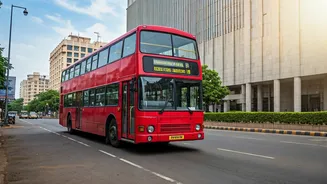
The double-decker buses of Bengaluru held a special place in the hearts of the city's residents. These buses were a part of everyday life, providing affordable
and accessible transport for many years. Operating from the mid-20th century, these buses were a common sight on the city's roads, particularly in areas like Majestic and City Market. They were not merely a means of getting from one place to another; they represented a unique blend of practicality and charm. The upper deck offered a vantage point, providing a panoramic view of the bustling city below. For children, the double-decker was a source of excitement, and for adults, a familiar part of the daily commute. These buses helped Bengaluru grow.
Early Days & Growth
The introduction of double-decker buses in Bengaluru coincided with the city's significant expansion and population increase. As Bengaluru evolved into a major urban center, the demand for public transport grew exponentially. Double-deckers, with their increased passenger capacity, became an efficient solution to address this need. The buses were initially introduced to ease congestion and facilitate the movement of a large number of commuters, particularly during peak hours. Their presence on the roads reflected the city's aspirations to modernize and accommodate its growing population. These buses were an important component of the city's public transport system, helping shape its character.
Impact on Society
The double-decker buses profoundly affected the social fabric of Bengaluru. They made transport more accessible, allowing people from all walks of life to navigate the city. They connected diverse communities, enabling interaction and facilitating the growth of a unified urban culture. These buses also played a role in the economic development of Bengaluru. They enabled people to reach their workplaces, shops, and markets efficiently, contributing to the city's economic activity. Moreover, they were a part of the city's landscape, and their presence shaped people's daily experiences and memories. The buses became a symbol of a shared urban experience, fostering a sense of community among the city's residents.
Decline & Demise
Various factors contributed to the decline and eventual withdrawal of Bengaluru's double-decker buses. As the city developed, traffic conditions worsened, making it difficult for the buses to operate efficiently. Furthermore, rising maintenance costs and the need for newer, more efficient transport solutions played a role. The introduction of newer, more modern buses and metro systems also reduced the demand for double-deckers. Safety concerns and changes in urban planning priorities also led to their gradual phasing out. Although they were no longer a part of the city's public transport system, these buses have a place in Bengaluru's history.
Nostalgia & Legacy
Even though double-decker buses are no longer a part of the Bengaluru transport system, they continue to evoke a sense of nostalgia among the city's residents. Memories of childhood journeys, commuting to work, and the unique experience of traveling on these buses are still vivid. They are often mentioned in conversations and popular culture. The buses have become a symbol of a bygone era, representing a simpler time in Bengaluru's history. The legacy of the double-decker buses remains strong. Their impact on the city's identity and collective memory is undeniable. The buses will always be associated with the charm of old Bengaluru.