





The Memory Glitch
When sleep is deep and uninterrupted, our brains are adept at discarding the ephemeral content of dreams. They're like fleeting electrical signals that
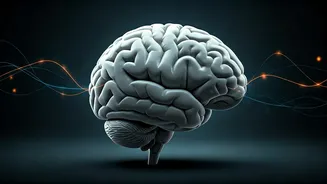
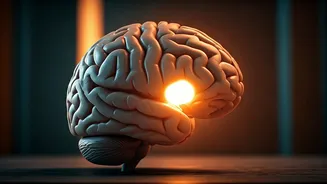
pass through without being stored long-term. However, a disturbed night's rest prevents this natural deletion process. According to sleep medicine experts, what we perceive as unusually vivid dreams during periods of poor sleep is actually a consequence of incomplete memory consolidation. If you wake up during REM sleep, the stage most associated with dreaming, the dream fragments don't get erased as they normally would. Instead, the disruption acts like a sudden jolt, leaving dream 'files' open and easily transferred into conscious memory because the brain didn't get a chance to hit 'delete' before waking.
Logic's Offline Mode
The peculiar realism of dreams during a night of unrest can be attributed to the brain's activity patterns during REM sleep. During this phase, the amygdala, responsible for processing emotions, and the occipital lobe, which handles visual information, are highly active. Concurrently, the prefrontal cortex, the brain's center for rational thought, critical analysis, and logic, is significantly less engaged. This means that while the emotional and visual components of a dream are running at full throttle, there's no logical 'editor' present to question the bizarre or impossible elements. Consequently, these unfiltered visions feel deeply immersive and strangely convincing because the usual checks and balances of conscious reasoning are temporarily suspended, making the night feel like a lived experience rather than mere sleep.
REM's Morning Peak
The timing of sleep disruptions plays a crucial role in how vividly we recall our dreams. Sleep doesn't follow a uniform pattern; it's a cycle of different stages. As the night progresses, the duration of deep, restorative sleep tends to decrease, while periods of REM sleep, where most vivid dreaming occurs, become longer. This means that by the early morning hours, the brain is spending a considerably larger proportion of its time in the dream state. If your natural sleep-wake cycle, or circadian rhythm, is thrown off balance—perhaps due to stress, exposure to screens, or an irregular schedule—you're much more prone to waking up during these extended REM phases. This increased likelihood of emerging from sleep during peak dream time directly contributes to remembering more of those potent dream narratives.
Remembering, Not Creating
The core paradox of experiencing intense dreams after a poor night's sleep is that your brain isn't necessarily generating more dream content. Instead, it's essentially being caught in the act of storing it. Experts emphasize that insufficient sleep doesn't inherently lead to an explosion of creativity in your dream life. Rather, it significantly enhances your capacity to retain those dreams. Therefore, a night characterized by what feels like 'vivid dreaming' isn't a testament to an exceptionally active imagination; it's a symptom of a compromised filtering mechanism. The increased recall isn't a sign of dreaming more, but of waking up during the very moments your brain was meant to erase the dream content, allowing it to seep into your conscious memory.