




The Missing Link
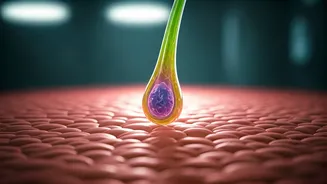
For years, replicating hair growth in a lab proved elusive, primarily due to a critical missing component. Previous experiments focused on two main cell
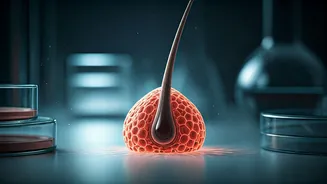
types: epithelial stem cells for hair shaft construction and dermal papilla cells to guide growth. While these could initiate follicle 'seeds,' they failed to develop further without surgical transplantation into a living organism. This limitation meant that even theoretically sound bioengineered follicles couldn't mature and establish normal growth cycles on their own, halting progress towards a practical solution for hair loss. The key challenge was creating a self-sustaining system that mimicked natural biological processes without external intervention, a hurdle that has long frustrated the scientific community in their quest to understand and replicate hair regeneration.
A Scaffold for Growth
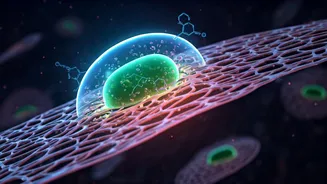
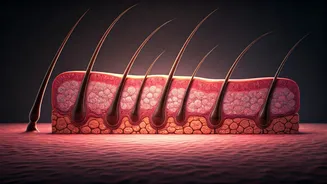
The recent breakthrough hinges on the ingenious inclusion of a third cell type, accessory mesenchymal cells, acting as a microscopic structural support system. Researchers discovered that by introducing these helper cells early in the follicle formation process, they envelop the follicle's bulge and dermal sheath. This 'scaffolding' provides the necessary physical framework, allowing the epithelial and dermal papilla cells to interact effectively. With this crucial support in place, the lab-grown follicles not only survived but thrived, progressing through normal, continuous growth cycles and successfully integrating with surrounding simulated tissues. This novel three-cell approach has finally enabled the creation of fully functional hair follicles that can grow and cycle independently, a significant departure from previous methods.
Future Hair Solutions
While the success achieved thus far was within laboratory mouse models, the implications are profound. This development paves the way for more effective testing of new hair-loss medications without the need for animal trials, allowing researchers to study hair growth mechanisms with greater precision. Furthermore, companies like OrganTech envision scaling this technology to produce lab-grown hair transplants for individuals experiencing hair loss. Beyond hair restoration, the underlying principle of orchestrating multiple cell types to build complex mini-organs could serve as a foundational blueprint for regenerating larger, vital organs in the future. Although a readily available cure for human baldness remains distant, this research marks a significant step forward in regenerative medicine, laying the groundwork for transformative therapies.
From Mice to Humans
It is essential to temper excitement with realism. The current success in generating hair follicles was demonstrated using mouse models. Translating these findings to humans involves a complex and lengthy process, including extensive testing on humanized models and rigorous clinical trials to ensure safety and efficacy. The biological intricacies of human physiology present unique challenges that must be meticulously addressed before any over-the-counter or readily available treatment can be developed. Therefore, while this research represents a monumental stride in bioengineering hair, widespread human application is still several years away, requiring careful navigation through regulatory and scientific hurdles.