



The Weaver's Handprint
Genuine Jamdani sarees are a testament to human artistry, not mechanical precision. Unlike factory-produced imitations that boast an unnerving, sterile
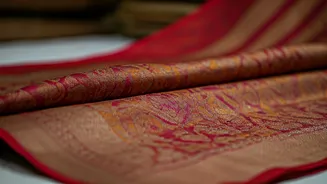
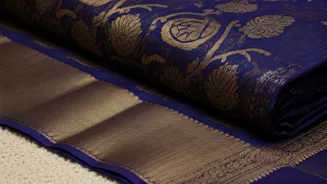
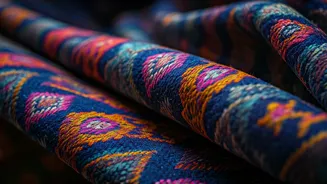
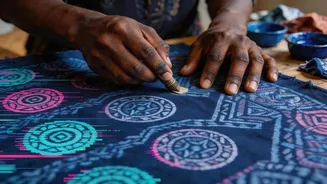
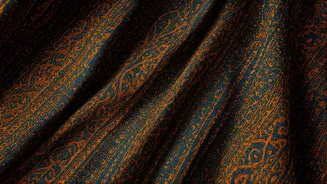
perfection, authentic pieces reveal the subtle, beautiful fingerprints of the artisan. Look for minute irregularities; perhaps a motif is just a whisper wider than its neighbour, or the base weave exhibits a natural, organic unevenness. These are the marks of skilled hands at work. When a pattern repeats with absolute, flawless uniformity across the fabric, it's a strong indication that a machine, rather than a person, created it. Examine the edges of the designs too. Artisanal weaving allows for incredibly crisp and distinct outlines, especially in geometric patterns. A power loom simply cannot replicate the artisan's delicate control over thread tension, often resulting in blurred or blocky edges in machine-made fakes.
The Reversible Secret
One of the quickest and most definitive ways to identify a genuine Jamdani is to examine its reverse side. Authentic Jamdani is remarkably reversible. The supplementary weft threads used to create the intricate motifs are seamlessly woven back into the fabric's structure by the artisan. This meticulous process ensures the backside looks almost identical to the front, a beautiful echo of the design. Machine-made counterfeits, however, cannot achieve this level of seamless integration. When you turn a fake Jamdani over, you'll likely find a jumbled, messy landscape of loose, cut, or thickly frayed threads. This chaotic reverse side is a dead giveaway that the saree was not handwoven with the care and precision characteristic of true Jamdani.
Material Matters: Feel and Stretch
Authentic Jamdani sarees are traditionally crafted from high-thread-count muslin cotton or premium silk. This results in a fabric that is incredibly sheer, feather-light, and possesses an exquisite drape that feels like a second skin. Counterfeiters often cut corners by incorporating synthetic materials like nylon or polyester into their mechanized looms. This synthetic blend compromises the fabric's natural qualities, making it stiff, less breathable, and slightly scratchy against the skin. A simple test for suspected synthetic blends involves finding a loose thread. Pure silk or fine cotton threads will snap cleanly when pulled. Conversely, a thread mixed with nylon will stubbornly stretch like a weak elastic band before eventually breaking, revealing its artificial nature.
Beyond the Surface: Weave and Certification
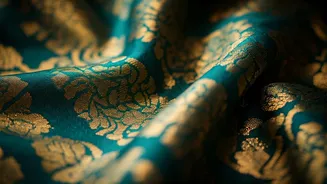
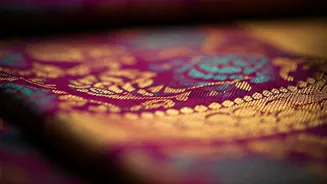
The very essence of Jamdani lies in its weave; the pattern is an intrinsic part of the fabric's structure, achieved through a discontinuous weft technique. If a design appears to be merely stitched on top of the fabric afterwards or exhibits characteristics of block printing, it is not a true Jamdani, as this fundamentally misses the definition of the craft. For those considering a significant investment, always inquire about the Geographical Indication (GI) tag. This certification, provided by reputable weavers and boutiques, serves as a guarantee of the textile's authentic handloom origins, often tracing back to Bengal. Possessing this tag ensures that you are acquiring a piece of living history and supporting genuine artisanal heritage, rather than falling for a mass-produced shortcut.