





The Steam Cleaning Revelation
The chore of cleaning a microwave, often a battle against dried splatters of sauces and soups, can be daunting. Traditional methods frequently involve
harsh chemical sprays that leave an unpleasant, artificial scent in the kitchen and can be detrimental to the environment. Fortunately, a surprisingly simple and effective approach is gaining traction, making microwave maintenance a breeze for busy households. This innovative technique requires nothing more than a damp towel and a few moments of your microwave's time. By harnessing the natural power of steam, caked-on food particles are softened and loosened, allowing them to be wiped away with minimal effort, eliminating the need for abrasive scrubbing or potent cleaning agents.
The Science Behind Steam Power
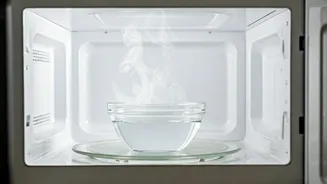
The effectiveness of this steam cleaning method is rooted in fundamental principles of physics and chemistry. When a wet towel is placed inside the microwave and heated, the water molecules within the towel rapidly vibrate, reach their boiling point, and transform into steam. This generated steam permeates the confined space of the microwave cavity, penetrating the hardened food debris. Instead of a direct assault on the grime, the steam works by rehydrating and breaking down the bonds that cause food to adhere stubbornly to the microwave's interior surfaces. Research, such as a study on microwave heating for solubilizing polysaccharides, indicates that microwave energy is particularly adept at dismantling complex organic compounds like polysaccharides, which are common in cooked foods and act as natural adhesives. By using steam as a medium for this energy, these 'glues' are dissolved, making the removal of residues significantly easier and more thorough than traditional wiping or scrubbing.
Healthier Cleaning, Hygienic Kitchen
Beyond its cleaning efficacy and ease of use, this steam method offers substantial benefits for household hygiene and personal health. Food residues left in a microwave can become breeding grounds for bacteria and other microbes, posing a sanitation risk, especially in an appliance used for preparing meals. Studies have shown that steam cleaning can dramatically reduce microbial activity on various surfaces. Opting for a natural approach is paramount when cleaning a food preparation area. Harsh chemical cleaners may leave behind imperceptible residues or release toxic fumes when the appliance is next used, contaminating food. The damp towel technique ensures that the cooking environment remains free from chemical contaminants, safeguarding your family's health. This preventative measure also helps avoid the formation of persistent deposits that can accumulate in crevices, hinges, and seals, maintaining the longevity and cleanliness of your microwave.
Simple Steps to a Spotless Microwave
Achieving a sparkling clean microwave with this method is remarkably straightforward. Begin by taking a clean cotton cloth and thoroughly soaking it with water until it is damp but not dripping excessively. Place this saturated cloth in the center of your microwave oven. Set the microwave to high power and run it for approximately 90 seconds. Once the cycle completes, resist the urge to open the door immediately. Instead, allow the appliance to sit undisturbed for another minute, permitting the trapped steam to fully permeate and loosen any hardened food particles. When you carefully open the door, be mindful of the hot blast of air. Then, using the same warmed cloth, simply wipe down the interior walls. You’ll find that even the most stubborn, baked-on marks will lift away with ease, leaving your microwave immaculately clean. This method is not only cost-effective and scientifically sound but also ensures your appliance functions optimally and hygienically.