






A Preventable Tragedy
A deeply saddening event in Maharashtra’s Nashik district has brought into sharp focus the hidden perils within ordinary homes for very young children.
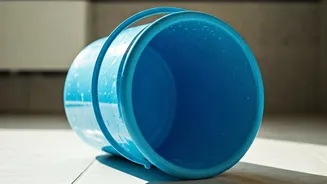
A one-year-old girl, identified as Hindvi Dattatray Bhosle, tragically lost her life after she fell into a bucket brimming with water while she was playing within her own residence. The family recounted that the child was engaged in her usual playtime inside the house on a Friday afternoon, around 2 PM, when she unexpectedly moved towards the bathroom. There, a bucket containing water had been placed. In an instant, the curious toddler, while attempting to peer into the bucket, lost her footing due to her small stature and tumbled directly into the water. The speed with which this normal playtime transitioned into a catastrophic event makes the incident all the more agonizing. By the time her family realized she was not in sight, the irreversible accident had already occurred. Her father, Dattatray Bhosle, acted swiftly, pulling her from the bucket and rushing her to Vasantrao Pawar Medical College in Adgaon for immediate medical attention. Regrettably, after a thorough examination, the medical professionals pronounced the child deceased. This devastating loss has left the family in profound grief and serves as a stark warning about the extreme vulnerability of toddlers within the home, particularly around water-filled containers that adults might otherwise deem innocuous. An accidental death case has been filed at the Adgaon police station, with authorities commencing an investigation into the circumstances surrounding this unfortunate incident.
Why Buckets Pose Risks
Medical experts often point out a specific anatomical characteristic in children aged between 1 and 2 years that contributes to their susceptibility to drowning accidents in containers like buckets. Their heads are disproportionately large and heavy compared to the rest of their bodies. This can easily cause them to tip forward if they lean over the edge of a bucket or tub, leading to a fall. Once submerged, their limited strength, developing coordination, and imbalanced physique make it incredibly challenging, if not impossible, for them to extricate themselves from the water and regain their footing. What seems like a commonplace household object can, within mere moments, transform into a significant hazard for a small child. These incidents, therefore, are not only emotionally devastating but also carry crucial lessons for parents and guardians. A child who is in the early stages of crawling or walking possesses an unpredictable mobility. Even a brief lapse in sustained attention from an adult can result in irreversible and tragic consequences. The swiftness with which a fall can occur and the limited ability of a young child to self-rescue underscore the critical need for vigilant oversight and environmental modifications to ensure their safety.
Crucial Safety Precautions
For families with toddlers, it is imperative to designate bathrooms, buckets, and tubs as high-risk zones requiring special attention. A paramount safety measure is to ensure that bathroom doors are consistently locked or securely fastened at all times. This simple step prevents curious crawlers or newly mobile toddlers from entering unsupervised. Furthermore, any buckets, tubs, or water drums should never be left filled when they are not actively in use. The simple yet highly effective practice of emptying these containers completely and storing them upside down significantly reduces the risk of accidental falls. This prevents children from attempting to peer into them, which can lead to slips, or from accidentally falling headfirst into the water. Beyond environmental modifications, unwavering supervision is equally vital. Young children should never be left unattended, even for a short period, while playing inside the house. At least one adult caregiver must maintain constant, attentive watch, especially when toddlers are exploring areas near bathrooms, kitchens, or storage spaces where various household containers might be present. Making living spaces as child-proof as possible is also a wise strategy. Any object that might capture a toddler’s interest or present a potential tripping or falling hazard should be placed well out of their reach. For very young children, even the briefest moment without direct adult supervision can unfortunately be sufficient for an accident to unfold.