


Catching the Lunar Glow
Get ready for a stunning lunar display as the first full moon of spring, affectionately known as the 'Pink Moon,' makes its appearance. While its peak
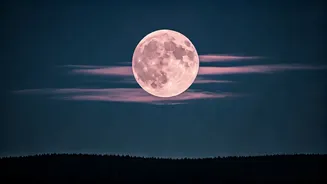
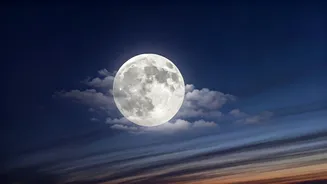
illumination is scheduled for the early hours of Thursday, April 2nd, the evening of Wednesday, April 1st, offers the prime opportunity for skygazers. As the moon begins its ascent above the horizon, it presents the most dramatic and visually captivating spectacle. This particular full moon is not just a treat for the eyes; it also plays a crucial role in determining the dates for significant religious observances like Easter and Passover. Therefore, marking your calendars for this event is essential for both astronomy enthusiasts and those planning for upcoming holidays. Its visibility extends over approximately three days, from early Tuesday morning to early Friday morning, providing ample chances to witness its beauty, though a telescope can enhance the viewing experience significantly.
The Pink Moon Myth
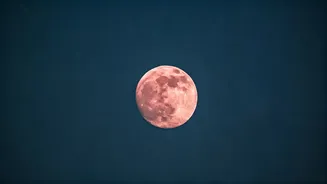
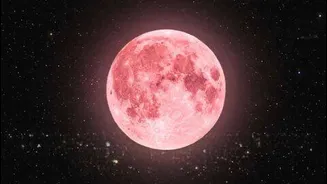
Contrary to its evocative name, the April 'Pink Moon' does not actually manifest as a pink orb in the night sky. This fascinating nomenclature originates from ancient traditions, particularly among early Native American tribes in the Northern Hemisphere. These communities meticulously tracked the progression of seasons by observing the monthly lunar cycles. They bestowed the name 'Pink Moon' upon this particular full moon to honor the vibrant pink wildflowers, such as wild ground phlox, that carpeted the landscape during the early spring months. Therefore, the name is a historical tribute to the season's awakening flora rather than a literal description of the moon's color. Beyond the 'Pink Moon,' it is also recognized by other names like the Sprouting Grass Moon, the Egg Moon, and the Fish Moon, reflecting different seasonal observations.
Science Behind the Hue
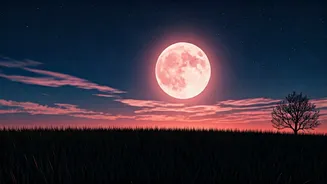
The striking orange or golden hue often observed with the 'Pink Moon' is a beautiful consequence of atmospheric physics. When the moon is low on the horizon, its light must traverse a greater expanse of Earth's atmosphere before reaching our eyes. This journey subjects the moonlight to scattering by atmospheric particles. Shorter wavelengths of light, such as blues and violets, are dispersed in various directions, effectively filtering them out. The longer wavelengths, which include reds, oranges, and yellows, are more resilient and penetrate the atmosphere more effectively. This phenomenon is precisely what gives the rising moon its warm, coppery glow, akin to the breathtaking fiery colors seen during sunsets. The same principle of light scattering through the atmosphere is responsible for both these captivating celestial displays.
Celestial Companion in Virgo
This month's lunar spectacle offers an additional treat for keen observers: a brilliant celestial companion. As you gaze at the full moon, direct your attention to an exceptionally bright point of light situated in close proximity to it. This luminous object is not an ordinary star; it is Spica, a magnificent binary star system that resides within the Virgo constellation. The close alignment of Spica with the radiant full moon creates a particularly dynamic and visually arresting scene in the night sky. Observing these two bright celestial bodies together provides a wonderful opportunity to appreciate the intricate beauty and arrangement of our cosmos, enhancing the overall experience of the 'Pink Moon' viewing.
Holiday Significance
Beyond its visual allure, the April 'Pink Moon' carries profound cultural and religious significance, particularly in its role of dictating the timing of major global holidays. Its appearance directly influences when millions worldwide will celebrate Easter and Passover. The tradition is ancient: Easter is always observed on the first Sunday immediately following the first full moon that occurs after the spring equinox. Given that the astronomical spring equinox for this year arrived on March 20th, the April full moon serves as the critical trigger for these celebrations. Its occurrence officially confirms and sets the dates for the upcoming Easter holiday weekend, underscoring its importance in both the natural and spiritual calendars.
Weather Watch
As with any astronomical event, the viewing experience for the 'Pink Moon' is ultimately dependent on meteorological conditions. For those in the UK, the forecast presents a mixed outlook. Skywatchers in England and Wales may encounter frustration due to anticipated heavy cloud cover and intermittent rain on Wednesday night, potentially obscuring the lunar view. However, the northern regions offer a more optimistic scenario. Scotland and Northern Ireland are expected to experience colder air masses, providing a higher likelihood of clear skies and uninterrupted opportunities to witness the full moon. Regardless of perfect visibility, taking a moment to step outside on Wednesday night is encouraged to connect with the awakening spring sky.