






Understanding the Enemy
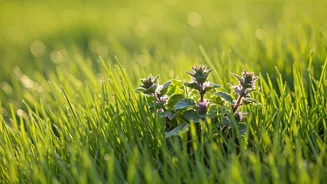
Creeping Charlie, scientifically identified as Glechoma hederacea, is a formidable invasive perennial originating from Europe but now a common nuisance
across much of the United States, thriving in various USDA Hardiness Zones. Belonging to the mint family, it presents as a low-growing plant, rarely exceeding twelve inches in height, yet its true threat lies in its aggressive propagation. This weed spreads voraciously through a dual mechanism: extensive underground root systems and long, trailing stems, known as stolons, which readily root wherever they make contact with the soil. This relentless growth pattern allows it to swiftly dominate lawns, encroaching into flower beds and disrupting the aesthetic appeal of any garden. Notably, ground ivy flourishes under conditions that most desirable plants struggle with, such as compacted, waterlogged, and nutrient-deficient soil, and it particularly favors shaded environments. Its ability to persist even through summer dormancy means that once established, it becomes a significant challenge to manage, often expanding from a small patch into a widespread infestation across an entire yard.
Effective Removal Tactics
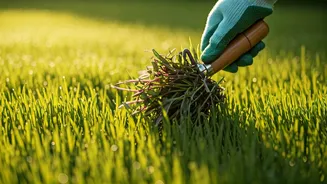
Successfully tackling a Creeping Charlie infestation requires a consistent and multi-pronged approach, as a single method is rarely sufficient for complete eradication. For early detection and small, isolated patches, manual removal using a garden trowel is an effective strategy. The key is to meticulously extract the entire root system to prevent regrowth. Performing this action before the plant flowers in spring is crucial as it disrupts the seed production cycle. When faced with a more widespread invasion, consider removing the entire affected section of sod with a sod lifter, followed by reseeding or laying new sod to re-establish a healthy turf. For particularly stubborn areas, targeted broadleaf herbicides are often the most efficient solution. Research indicates that herbicides containing triclopyr or 2,4-D are particularly effective. A study on the control of ground ivy highlighted that combining cultural practices with chemical applications yields superior long-term results compared to relying on either method in isolation. The timing of herbicide application is also critical; fall treatments are more advantageous than spring applications. This is because the plant is actively drawing nutrients, including the herbicide, down into its root system in preparation for winter. Applying in late September and reassessing the area after four weeks can yield significant improvements. To combat potential herbicide resistance, it is advisable to alternate the active ingredients used or opt for products that combine multiple herbicides. When applying treatments near desirable flower beds, take precautions to protect ornamental plants by using cardboard or plastic sheeting as a barrier. For precise application in tight spaces, consider dampening a sponge with the herbicide and wiping the leaves of the ground ivy directly.
Preventing Recurrence
The most robust defense against the return of Creeping Charlie is the cultivation of a dense, healthy lawn that leaves no room for invasive species to take hold. This involves a consistent regimen of proper lawn care, including adequate watering to promote turf vigor, mowing at the optimal height for your specific grass type, and regular fertilization to ensure nutrient availability. Increasing sunlight exposure to the lawn by trimming overhanging tree branches can also create a less favorable environment for ground ivy. In areas that are persistently shady and damp, and where grass struggles to compete, a strategic change in landscaping might be the most practical solution. Consider replacing the lawn in these challenging spots with shade-tolerant ground cover plants that can thrive in such conditions. Alternatively, establishing a thick layer of mulch, at least six inches deep, can effectively suppress weed growth and prevent Creeping Charlie from establishing itself. It's important to note that physical barriers such as plastic or metal edging are generally ineffective against ground ivy, as its underground root systems can easily circumvent or penetrate these materials. Therefore, a comprehensive and long-term strategy that focuses on creating a competitive environment for your lawn is essential for sustained control.