






Fine Motor Skill Enhancement
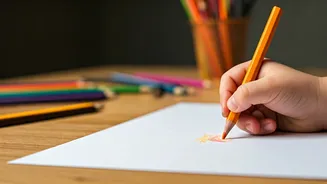
The act of gripping a crayon or pencil, applying the right amount of pressure, and making intentional marks are all exercises that refine a child's fine motor
control. Research consistently links improvements in motor skills to enhanced cognitive abilities in both children and adolescents. Studies specifically focusing on children's drawing habits demonstrate a direct correlation between this activity and the development of their motor and visuospatial skills. Consequently, drawing serves as a readily available and engaging daily practice, providing essential workouts for developing hands and minds alike.
Boosting Executive Functions
When a child draws with the intention of representing something specific, it moves beyond random scribbles to become a purposeful cognitive task. This process is deeply intertwined with crucial executive functions, including working memory, the ability to inhibit impulsive actions, and mental flexibility in shifting between ideas. These functions are foundational for children to maintain focus, regulate their impulses, and transition effectively between different thoughts or concepts. In simpler terms, drawing requires a child to engage in planning, making adjustments as they go, and persisting until their vision is realized, thereby strengthening these vital cognitive skills.
Supporting Language Growth
Fascinating research highlights a symbiotic relationship between the development of drawing and language skills in early childhood. Even in very young children, these two systems operate distinctly yet are powerfully interconnected, with executive functions playing a pivotal role in mediating this association. Drawing offers children a tangible means to visually express their understanding and knowledge before they possess the precise vocabulary to articulate it verbally. This allows them to build a foundation of conceptual representation that language can later build upon.
Building Memory & Recall
Engaging in drawing involves more than just creating visual marks on paper; it's an active process of retrieving stored information and translating it into a visual format. According to research, the act of producing a drawing is partly dependent on a child's memory capabilities. Furthermore, studies have shown that drawings can effectively illustrate how memories evolve and change over time. For children, this means that drawing can serve as an accessible and gentle method to regularly practice recalling information and organizing their thoughts in a structured way.
Nurturing Creativity
Research consistently demonstrates a strong link between a child's executive flexibility and their creative potential. The greater a child's capacity to adapt, imagine new possibilities, and reframe existing concepts, the more fluidly their creative thoughts can emerge. Drawing provides a concrete canvas for this flexibility to manifest. It encourages a mindset where a house can defy architectural norms with five windows, the sun can radiate in unconventional colors, and a simple stick figure can evolve into the protagonist of an elaborate narrative, thereby fostering imaginative thinking.
Safe Emotional Outlet
Children often find it challenging to articulate their feelings and emotions through precise verbal language. Drawings can act as a revealing window into a child's inner emotional landscape, capturing their feelings, perceptions, and current emotional states. Independent studies further indicate that using drawing as a distraction activity can lead to improvements in short-term mood regulation. For many youngsters, the availability of paper and a drawing tool offers a more comfortable and accessible avenue for emotional expression than engaging in direct verbal conversations.