
The Great South Asian Dessert Debate
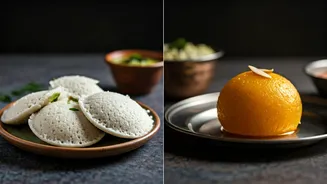
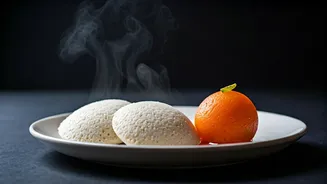
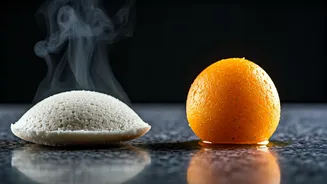
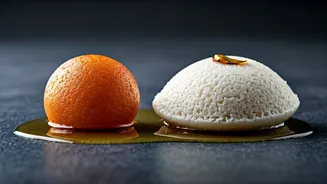
The digital realm recently buzzed with a lively discussion ignited by an X user's bold assertion that rasgulla is merely an 'idli dipped in sugar syrup.'
This seemingly simple culinary critique rapidly morphed into a broader conversation about regional pride and the deep emotional connections Indians harbor for their iconic dishes. The spark was a user's contemplation on how to describe the unique flavors of Bengali sweets like Mishti Doi and Nolen Gurer Rosogolla. This prompted another user to diminish rasgulla's standing, sparking outrage and drawing the attention of esteemed figures like Shashi Tharoor. His intervention transformed a casual food spat into an exploration of culinary identity, highlighting how food transcends mere sustenance to become a potent symbol of culture and heritage for communities across India.
Tharoor's Culinary Cosmology
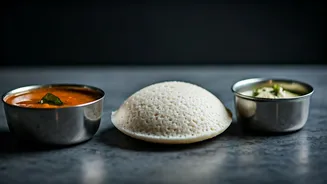
Shashi Tharoor, known for his eloquent prose, stepped into the fray with a characteristically detailed and nuanced response. He didn't just disagree; he articulated a profound 'cosmological misunderstanding' in equating rasgulla with idli. Tharoor meticulously dissected the fundamental differences, explaining that one is derived from chhena—delicate curdled milk solids—while the other is born from a meticulously fermented batter of rice and urad dal. He emphasized that their origins and compositions belong to entirely separate culinary universes. He further elaborated on their distinct structural and experiential qualities: the rasgulla, an airy, spongy vessel designed to hold syrup, versus the idli, a dense, wholesome, steamed matrix of complex carbohydrates and proteins. Their taste, texture, and even their 'existential purpose,' he argued, share no common ground, underscoring the absurdity of the initial comparison.
Idli: A Biotechnology Marvel
Beyond mere taste and texture, Tharoor passionately defended the idli's cultural and nutritional significance, reframing it not as a 'bland cake' but as a 'masterclass in biotechnology.' He lauded the intricate science behind its fermentation, describing the process of balancing 'delicate microflora of wild fermentation' over a cold night to produce a steamed 'cloud.' This triumph of gut health, lightness, and nutritional balance, he asserted, is a testament to South Indian culinary genius. He highlighted how the idli is perfectly engineered to complement the sharp tang of sambar or the fiery depth of molaga-podi, absorbing these flavors harmoniously. His concluding remarks humorously but firmly defended the idli's inherent dignity, urging that its noble, fermented essence should not be trivialized in casual culinary debates.
Experts Weigh In On Distinction
Food author and chef Sadaf Hussain corroborated Tharoor's points, stating that the comparison between rasgulla and idli is technically inaccurate due to their fundamentally different natures, despite a shared spongy texture. He highlighted that rasgulla is more of a celebratory sweet, while idlis are a daily staple, a fundamental necessity for many. Celebrity chef Ananya Banerjee further elaborated on the technical disparities: rasgulla is made from kneaded chhena balls simmered in syrup, resulting in a spongy texture that absorbs liquid. In contrast, idli is a steamed savory cake from fermented rice and lentil batter, yielding a grainy, porous structure. The distinct cooking methods—boiling in syrup versus steaming—and the entirely different ingredients, preparation processes, and resulting mouthfeel render the analogy misleading, according to Banerjee.
Food as Cultural Shorthand
Food science expert Alok Singh explained that such comparisons are more than just culinary observations; they inadvertently diminish the distinct technical and cultural labor embedded in regional dishes. In India, regional pride is deeply intertwined with 'terroir' and time-honored techniques. The idli embodies South Indian patience and fermentation artistry, while the rasgulla represents a historical breakthrough in Bengali and Odia confectionery, particularly the mastery of chhena. When these dishes are trivialized, it can feel like an assault on a community's collective memory, as food often serves as a vital link to identity for those who migrate or assimilate. It's a 'cultural shorthand' that carries immense weight.
The Art of Fermentation Mastery
The key to a truly exceptional idli, as highlighted by Chef Hussain, lies in the critical process of fermentation. If this stage goes awry, the idlis can become dense instead of soft and airy, explaining why homemade versions might differ from restaurant quality. Chef Banerjee elaborated that achieving idli perfection requires a delicate alignment of factors: the precise rice-to-lentil ratio, the quality of fermentation, the grinding texture, batter aeration, and steaming time. Even minor shifts in climate or fermentation can dramatically alter the final outcome. This intricate dance of elements underscores the skill involved in creating this seemingly simple dish.
Ancient Biotechnology in Every Bite
Food science expert Alok Singh affirmed Shashi Tharoor's characterization of the idli as a 'masterclass in biotechnology,' noting that Indian ancestors intuitively mastered 'controlled spoilage' long before modern scientific understanding. Fermentation served as a primary method for food preservation and nutritional enhancement in India's tropical climate. By cultivating specific bacteria, they could not only prevent rapid spoilage but also improve digestibility. The science is remarkable: soaking urad dal and rice encourages beneficial microbes like Leuconostoc mesenteroides and Lactobacillus bulgaricus, which break down starches and neutralize anti-nutrients like phytic acid, thereby enhancing mineral absorption. This process also boosts B-vitamin production, crucial for grain-based diets. This was not seen as lab work but as a harmonious rhythm, incorporating elements like grinder placement, kitchen temperature, and even the cook's touch to introduce local microflora, all contributing to the creation of soft, leavened textures without chemical leaveners.