
Idli: South Indian Staple
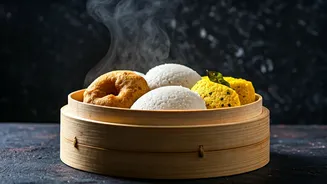
Idli, a South Indian classic, holds a special place in breakfast menus across India. These fluffy, steamed cakes are made from fermented batter of rice
and lentils, offering a light and easily digestible meal. The fermentation process not only enhances the flavor but also increases the bioavailability of nutrients. Serve them with sambar and chutney for a wholesome and satisfying start to the day. The simplicity of idli makes it a versatile option, suitable for all ages and dietary preferences. It's a quick, easy to prepare, and a healthy choice, making it a breakfast favorite across India and beyond. The preparation can be simplified by using readymade idli mixes, making it perfect for busy mornings.
Dhokla: Gujarati Delight
Dhokla, originating from Gujarat, offers a savory and spongy steamed cake, typically made from fermented batter of gram flour (besan). This dish is seasoned with mustard seeds, green chilies, and often garnished with coriander leaves. The steaming process keeps the dhokla light and low in oil, making it a healthy breakfast choice. Its slightly tangy and sweet flavor profile is a delightful experience. Dhokla is not only delicious but also a good source of protein, especially when prepared with a mix of lentils. It is a quick to prepare and can be enjoyed as a light meal or snack. The versatility of Dhokla allows for many variations, including the use of different spices and toppings to suit various tastes. Commonly served with green chutney and a side of sev, it is a well-loved dish across India.
Puttu: Kerala's Pride
Puttu, a traditional breakfast from Kerala, is made from steamed cylinders of ground rice and coconut. This dish is usually steamed in a puttu kutti, a special steamer, giving it a unique shape and texture. The combination of rice and coconut provides a balance of carbohydrates and healthy fats. Puttu is often served with kadala curry (black chickpea curry) or a sweet accompaniment like sugar and banana. This simple yet satisfying meal is a staple in Kerala households, offering a blend of flavors and textures. The preparation is straightforward, and the dish is known for its versatility. The steaming process preserves the nutrients and enhances the flavor of the ingredients. Puttu provides a filling and nutritious start to the day. It is easily customizable, and its preparation offers a delicious journey to Kerala's rich culinary traditions.
Modak: Maharashtra's Treat
Modak is a sweet dumpling originating from Maharashtra, typically prepared during the Ganesh Chaturthi festival. These steamed delights are made from rice flour and filled with a mixture of grated coconut and jaggery. The steaming process gently cooks the dumplings, preserving their delicate flavors and textures. The soft, chewy exterior combined with the sweet and aromatic filling offers a satisfying experience. Modak symbolizes prosperity and is a cherished part of Maharashtrian cuisine. The preparation requires skill and patience, often involving shaping the dumplings by hand. These treats can be enjoyed warm and are best eaten fresh. It's not just a dish but a cultural emblem and an expression of devotion. Modak offers a sweet start to the day.
Khaman: Another Gujarati
Khaman, a popular Gujarati snack, is a variation of dhokla, but it has a distinct taste and texture. Made from chana dal (split chickpeas), this steamed cake is known for its fluffy and porous texture. Seasoning typically includes turmeric, green chilies, and a tempering of mustard seeds. The steaming process gives it a soft and airy consistency. Khaman is often served with sev (thin, crispy noodles) and a variety of chutneys. It is a light yet filling breakfast option. Its preparation involves fermenting the batter, which is essential for developing its characteristic texture and taste. Khaman is a tasty and versatile dish, and offers a delicious start to the day. It is also a good source of protein and carbohydrates, providing energy for the day ahead.
Momos: Himalayan Influence
Momos, steamed dumplings with origins in the Himalayas, have become widely popular in India. They typically contain a filling of minced vegetables or meat, seasoned with spices. The steaming process retains the moisture and flavor of the filling, resulting in a savory and satisfying breakfast. Served with a spicy chutney, momos offer a flavorful and filling meal. Different regions have adapted momos with varied fillings and sauces, but the essential method of steaming remains. Momos provide a quick and convenient breakfast option. These dumplings are a favorite among all age groups. Momos have quickly become a favorite street food across India. They are perfect for those who want a quick and delicious meal.
Malabar Puttu: Kerala Fusion
Malabar Puttu, a variation of the traditional Puttu, incorporates unique flavors and ingredients. This version often includes spices and variations in the rice flour mix, adding complexity to the traditional recipe. Steaming ensures the flavors meld together, offering a rich and aromatic experience. Served with curry and coconut, Malabar Puttu is a hearty and flavorful breakfast. The method of preparation varies. The choice of spices and fillings is also important. The addition of coconut enhances both the texture and the flavor. This twist on the traditional recipe offers a delicious alternative. It's a great choice for those seeking to experience different regional flavors. The dish is a celebration of culinary creativity, providing a fresh take on a classic.
Idiyappam: String Hoppers
Idiyappam, also known as string hoppers, is a South Indian breakfast made from rice flour. The flour is pressed into thin strands and then steamed, creating a delicate and light dish. The steaming process ensures a soft and fluffy texture. Idiyappam is usually served with vegetable stew, egg curry, or coconut milk, making it a versatile meal. Its light texture makes it easily digestible, and it is a good source of carbohydrates. The simple ingredients and preparation make it an accessible option for any breakfast. It is a favorite among children and adults alike. It's a healthy and enjoyable option. String hoppers offer a delightful and light start to the day. They provide a delicious combination of textures and flavors.
Bati: Rajasthan's Classic
Bati, a traditional Rajasthani dish, is prepared by baking wheat dough balls, and then these are steamed to achieve a fluffy inside. The dough balls, are baked until they become golden and crispy on the outside. Steaming then provides a soft and airy interior. Bati is usually served with dal (lentil soup) and churma (sweet crumbly dessert). This combination offers a balanced meal with flavors and textures. The preparation involves a slow cooking process. The result is a satisfying and filling breakfast. Bati offers a taste of Rajasthan's rich culinary traditions. This dish is rich in carbohydrates, providing sustained energy. It is a hearty choice and offers a unique culinary experience.
Kothu Parotta: Tamil Treat
Kothu Parotta, originating from Tamil Nadu, is a popular breakfast dish made by chopping parotta (layered flatbread) and mixing it with vegetables, eggs, or meat. This mixture is then steamed or stir-fried. The steaming process helps to meld the flavors, creating a dish with a unique taste and texture. Kothu Parotta is seasoned with spices, and it is a flavorful and filling breakfast option. Its preparation involves chopping the parotta and mixing it with the other ingredients, creating a flavorful and satisfying meal. The mix can be customized with various ingredients. Kothu Parotta provides a delightful combination of flavors. This dish showcases Tamil Nadu's street food culture. It is perfect for those who like savory and fulfilling meals.