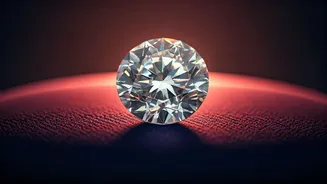










Natural vs. Lab-Grown
Choosing between natural and lab-grown diamonds is a primary decision for first-time buyers. While visually indistinguishable to the naked eye, both are
scientifically genuine diamonds composed of pure carbon. The fundamental difference lies in their origin: natural diamonds are formed over geological eons deep within the Earth, whereas lab-grown diamonds are meticulously crafted in controlled environments over a matter of weeks. This difference in genesis significantly impacts cost, with lab-grown options typically ranging 70-90% less expensive than their natural counterparts. For instance, a budget that might afford a 0.5-carat natural diamond could instead secure a 1.5-carat lab-grown diamond, offering a tangible difference in size for the same financial outlay. The choice often hinges on personal priorities, making it essential to understand these distinctions thoroughly.
Identifying Diamond Origins
Distinguishing between natural and lab-grown diamonds requires careful attention, as even expert gemologists may find them identical under standard magnification. The most reliable method involves scrutinizing the diamond's certificate and examining its girdle for laser inscriptions. Many lab-grown diamonds are explicitly marked with terms like 'lab-grown,' while natural diamonds typically lack such origin disclosures. A critical step for any buyer is to insist on a grading certificate and to verify its authenticity online through the issuing laboratory's website. Should a jeweler be unable or unwilling to provide a verifiable certificate, it is advisable to disengage from the purchase. Specialized diamond testers are also available, providing an additional layer of assurance before finalizing a transaction.
Decoding the 4Cs
Beyond the basic identification, understanding the '4 Cs'—Cut, Colour, Clarity, and Carat—is fundamental for assessing diamond value and beauty. Cut is paramount as it dictates the diamond's sparkle and brilliance, and it should never be a point of compromise. Diamond colour is graded from D (completely colourless) to Z (noticeably yellowish); a sweet spot often found at G or H offers a visually near-colourless appearance at a more accessible price point. Clarity refers to internal imperfections; grades like VS1 or VS2 are considered excellent practical choices for most consumers. Carat denotes weight, not physical size, and a slight reduction in carat weight (e.g., 0.90 carats) can lead to substantial cost savings while appearing virtually identical once set. For natural solitaires, additional parameters like 'BGM' (Blueish Greenish Milky) and Fluorescence, detailed on GIA certificates, significantly influence price, with 'NO BGM' and 'None' fluorescence generally being preferred.
Budgeting and Customization
Achieving your dream diamond piece often involves smart budgeting, particularly when considering made-to-order options. While ready-made jewelry shops typically display fixed prices, the cost of custom jewelry can fluctuate dramatically based on the chosen diamond's colour and clarity, as well as the gold's karat. Opting for a made-to-order design grants you the flexibility to select specific diamond parameters, thereby tailoring the final cost to your budget without sacrificing your preferred aesthetic. It's important to recognize that a single design can range from ₹50,000 to ₹5,00,000 or more, entirely dependent on the chosen specifications. This customizable approach ensures you can attain both the design and quality you desire within your financial comfort zone.
Certification & Red Flags
Ensuring transparency is key when buying a diamond. Critical questions to ask include whether the diamond is natural or lab-grown, with the certificate confirming its origin. Always verify the report number online in real-time. Clarify making charges as a separate item and always inquire about the buyback or exchange policy, ensuring it's documented. Be wary of red flags such as vague 'as per design' making charges, bundled pricing with no itemized cost breakdown, prices significantly below market rates for the stated grade, and high-pressure sales tactics. A trustworthy jeweler will readily answer questions and provide clear, verifiable information.
Choosing Certifications
Selecting the right certification is crucial for validating a diamond's quality and origin. The Gemological Institute of America (GIA) is widely recognized as the premier authority for natural diamonds, renowned for its stringent and consistent grading standards. For lab-grown diamonds, the International Gemological Institute (IGI) has emerged as the leading certification body, particularly dominant in India, Europe, and Asia. A GIA certificate for a natural diamond generally instills greater confidence and often supports a stronger resale value. Conversely, for lab-grown diamonds, IGI certification is the industry standard and widely accepted, providing assurance for buyers in that category.
Metal and Resale Value
When considering the metal for your diamond jewelry, 18K gold, comprising 75% pure gold, is a popular choice in India, offering a good blend of durability and richness. Platinum, a naturally white, denser metal, is exceptionally durable, ideal for daily wear, and maintains its luster without fading, though it typically comes with a higher initial cost. For resale, gold holds a transparent daily market rate in India, making its value readily recoverable. It is imperative to understand the truth about resale value, especially concerning lab-grown diamonds. Due to their mass manufacturing and market dynamics, lab-grown diamonds typically have minimal resale value and have seen significant price drops. Natural diamonds, while not investment-grade, generally retain value and can appreciate, making certified natural diamonds with intact reports a more secure choice if resale is a concern. Always obtain a written buyback or exchange policy before purchasing.