




Shade-Loving Beauties
For those garden corners that don't see much sun, there's a delightful array of perennials that thrive in shadier conditions. The bleeding heart (Lamprocapnos
spectabilis) is a prime example, flourishing in deep shade to partial sun. It graces the garden with delicate, heart-shaped flowers in shades of pink, red, or white, often appearing on gracefully arching stems. While typically blooming for about six weeks in late spring, it can surprise with a return of color in the autumn when temperatures drop. Another excellent choice for shaded areas is Astilbe, known for its feathery plumes that add a dramatic flair with little effort. Varieties like 'Deutschland' offer white blooms and an earlier flowering period, and importantly, Astilbe is naturally resistant to deer, a significant advantage for many gardeners. These plants prove that even the less sunlit parts of your yard can be a source of continuous visual delight without demanding constant attention.
Sun-Drenched Sprawlers
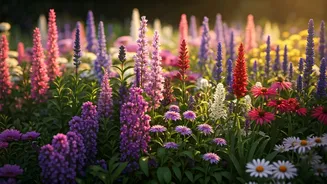
In gardens blessed with abundant sunlight, a wide variety of perennials can truly shine. Garden phlox (Phlox paniculata) is a standout, filling the air with a summery fragrance and offering a spectrum of colors including pink, lavender, white, and red. Its blooms typically last from mid-June right up until the first frost, and it also serves as a fantastic cutting flower, bringing its beauty indoors. Yarrow is another resilient option, producing flowers on sturdy, two to three-foot stems from June through September. While classic yarrow is white, you can find cultivars in yellow, pink, red, and lilac hues. A simple act of deadheading—removing spent blooms—encourages more flowering, a task that takes mere seconds. For that quintessential summer garden aesthetic, Shasta daisies are unparalleled. Their iconic white petals surrounding sunny yellow centers bloom from July until frost atop cheerful, tall stems, evoking images of idyllic summer landscapes and lending a timeless charm to any sunny garden space.
Dual-Duty Performers
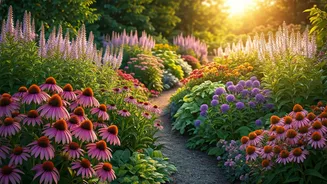
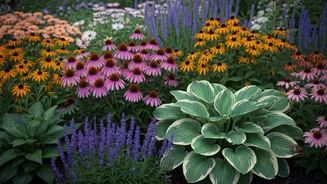
Certain perennials are exceptional for their extended blooming periods and their ability to attract beneficial wildlife, truly pulling double duty in the garden. Echinacea, commonly known as purple coneflower, is a star performer, blooming profusely from early June through September. Beyond its visual appeal, it's a powerful magnet for pollinators like bees and butterflies. While traditionally purple, a wide array of colors are now available, including white, orange, yellow, and red cultivars. Echinacea also stands out for its drought tolerance, making it a robust choice during dry spells. Cardinal flower (Lobelia cardinalis) takes it a step further with brilliant red spikes that bloom from July to late September, almost guaranteeing a visit from hummingbirds, making it an ideal plant for wildlife enthusiasts. Coreopsis, particularly the threadleaf varieties, might offer the longest bloom time of all, flowering from spring until frost. Despite its delicate appearance, it's surprisingly tough, and a mid-summer shearing can trigger a second, abundant wave of blooms, ensuring continuous color and interest.
Low-Effort Wonders
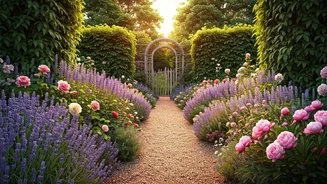
For gardeners seeking maximum visual impact with minimal intervention, several perennial varieties are exceptionally rewarding. Knock Out roses have significantly simplified rose cultivation, offering continuous blooms from spring to fall with virtually no complex pruning or fuss. These adaptable shrubs grow to about three to four feet in height and width, available in a vibrant palette of yellow, red, orange, pink, and white. Ice plant (Delosperma cooperi) is another remarkably low-maintenance winner, a ground-hugging succulent that produces daisy-like flowers in purplish-pink from June through October. It thrives in dry, sandy conditions and full sun, requiring very little from the gardener. Rounding out this category is the butterfly bush, which produces long, fragrant flower clusters that are a favorite of butterflies. When selecting butterfly bushes, it's advisable to seek out sterile, non-invasive varieties to prevent aggressive spread in certain regions, ensuring your garden's beauty doesn't come at an ecological cost.