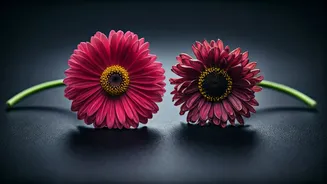







Divergent Values Emerge
Over time, our life paths can lead us in different directions, impacting our core beliefs and priorities. You might find yourself making choices about
your career, relationships, or ethical stances that starkly contrast with those of a longtime friend. What once felt like a shared perspective on important matters now seems foreign or even uncomfortable, indicating a divergence in your personal growth. To navigate this, take a moment to understand what has changed within you and establish the boundaries that feel right. Maintaining contact can be possible if mutual respect allows for differing opinions, or you may choose to limit deeper discussions if they consistently lead to unproductive debates. It's important to acknowledge that not all friendships are destined to align with your values indefinitely.
Feeling Unheard or Misunderstood
A significant sign that a friendship is evolving is when sharing something personal is met with indifference, a dismissive joke, or a swift change of subject. If you consistently feel that your thoughts and feelings aren't being acknowledged or truly grasped, it can signal that your personal development has outpaced the friendship's capacity to keep up. This subtle disconnect often goes unnoticed for extended periods. To address this, first validate your own need for understanding. You could gently express your feelings to your friend, perhaps by saying, 'Sometimes I feel like my words don't quite land,' and gauge their willingness to adapt. If they are unable or unwilling to shift, you can still cherish the memories and maintain a respectful distance, creating space for new relationships that offer genuine connection and comprehension.
One-Sided Effort
When you consistently find yourself initiating contact, arranging meetings, and being the primary force in maintaining the friendship, it points to an imbalance. This lack of reciprocal engagement is a hallmark of outgrowing a connection; you remain invested, while your friend shows minimal effort. To address this, try stepping back a little and observing the dynamic. Reduce the frequency of your messages and see if they take the initiative to reach out. If they don't, it's a strong indication that you are carrying the relationship alone. You might choose to express your feelings by saying something like, 'I've really missed our conversations,' or, if there's no sign of change, you can allow the friendship to naturally fade without direct confrontation.
Energy Depletion, Not Recharge
Friendships that once revitalized you may now leave you feeling exhausted, irritated, or emotionally drained. This can occur when you find yourself repeatedly taking on their problems or listening to the same recurring issues, feeling more like a perpetual caretaker than an equal friend. This pattern suggests that you've outgrown the established dynamic, rather than experiencing a temporary rough patch. To manage this, implementing boundaries is crucial. Consider limiting the frequency of your availability or the depth of your engagement with their challenges. A simple statement like, 'I care about you, but I need to protect my own energy,' can be effective. It is perfectly acceptable to distance yourself from a friendship that consistently depletes your energy without offering sufficient reciprocity.
Anticipation Fades
If you've transitioned from eagerly anticipating your friend's calls or texts to viewing them as a chore or an obligation, it's a quiet signal that the friendship has served its purpose in its current form. While you might still hold affection for them, the former excitement and strong emotional pull have diminished. This shift isn't a sign of disloyalty, but rather a natural progression in personal growth. To deal with this, begin by being honest with yourself about your feelings. If you do decide to meet, focus on being present rather than attempting to recreate past chemistry. If the growing distance feels permanent, you can gradually step back from the relationship without a dramatic or abrupt ending.