







Power in Black
Donning black attire for your workday can dramatically alter your presence, infusing your movements with a sense of purpose and intentionality. This isn't
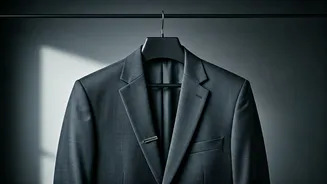
merely a style choice; it's a psychological phenomenon influencing how you perceive yourself and how colleagues perceive you. When individuals consistently opt for black outfits, they are often perceived as more competent, authoritative, and trustworthy, even within the initial moments of interaction. This effect is particularly pronounced in environments like law firms and executive offices, where black can act as a form of psychological armor. Research into formal workplace dress codes indicates that employees who adopt such attire report feeling more empowered, confident, and capable. This shift isn't about altering one's inherent personality but about influencing self-perception through clothing, a concept known as 'enclothed cognition.' It transforms mere attendance into a state of being prepared and ready to face professional challenges head-on. Colleagues readily absorb these signals; a survey of 1,000 individuals identified black as the color most strongly associated with confidence and reliability, especially in professional contexts and job interviews. This perception often precedes an assessment of actual abilities, with black acting as an initial, powerful statement of competence.
The Deeper Signals
Beyond the immediate projection of power, the consistent choice of black attire can reveal more complex underlying motivations. While black might provide a psychological shield, research suggests it can also be a refuge for those experiencing anxiety or emotional distress. A study involving 300 women identified a significant correlation: individuals who identified as frequent black wearers were nearly three times more likely to report experiencing anxiety regularly. Similarly, those who described themselves as worriers or having melancholic tendencies were twice as likely to adopt black as their predominant clothing color. This pattern suggests that black's association with emotional protection might be serving a dual purpose, shielding the wearer from external pressures while also reflecting internal struggles. The color black, in approximately 78.6% of analyzed cases, tends to evoke negative emotions such as sadness, depression, and fear. It's crucial to understand that black doesn't inherently cause these feelings; rather, individuals grappling with anxiety, mood fluctuations, or emotional burnout are drawn to it because it provides a sense of being shielded. This protective layer can feel like a necessary barrier against a world that demands a great deal, offering a sense of comfort and refuge for those feeling overwhelmed, isolated, or emotionally depleted.
Comfort's Double Edge
While black can offer a comforting embrace, this familiarity can inadvertently transform into a limiting enclosure. When habitually chosen as a form of emotional defense, wearing black can signal to your nervous system that a constant state of vigilance is required. This persistent 'threat response' can keep your amygdala in an activated state, leading to a low-level, ongoing feeling of being under pressure or in danger. The research highlights that depression can manifest in clothing choices, with individuals often gravitating towards dark, loose-fitting, or repetitive garments that facilitate a sense of concealment. This raises a critical question: are you choosing black because you are flourishing and confident, or are you selecting it as a means of coping with internal challenges, allowing the color to grant you implicit permission to fade into the background? It's a subtle but significant distinction that can impact one's overall sense of well-being and outward presentation. This practice, while seemingly offering solace, may inadvertently hinder genuine engagement and personal growth by reinforcing a defensive posture.