





Introducing Living Walls
At the 2025 Venice Architecture Biennale, a remarkable innovation captured attention: the 'living walls' presented by Picoplanktonics. This project, a testament
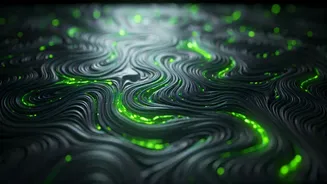
to an ecology-first design philosophy, showcased 3D-printed structures teeming with life in the form of cyanobacteria. These weren't mere architectural models; they were dynamic systems requiring daily care in terms of light, humidity, and temperature to thrive. Developed over four years by the Living Room Collective, under the guidance of biodesigner Andrea Shin Ling, this exhibit challenged the conventional notion of static architecture by prioritizing living systems. It represented the largest architectural structure constructed from living materials, designed to host beneficial microbes for the crucial task of carbon sequestration, demonstrating a bold step towards biologically integrated design.
The Science Behind Survival
The remarkable sustenance of these 'living walls' is rooted in advanced scientific research, detailed in a Nature Communications paper from April 23, 2025. A team from ETH Zurich, spearheaded by Dalia Dranseike, Yifan Cui, and Mark W. Tibbitt, with significant contributions from Andrea S. Ling and Benjamin Dillenburger, successfully integrated Synechococcus sp. PCC 7002 cyanobacteria into a specialized 3D-printable hydrogel, F127-BUM. This living material was meticulously tested over a period of 400 days. During this time, it demonstrated a substantial capacity for carbon dioxide capture, accumulating an average of 26 ± 7 milligrams of CO₂ per gram of hydrogel. This impressive feat was achieved through two primary biological processes: photosynthesis, where cyanobacteria convert CO₂ into energy, and microbially induced carbonate precipitation (MICP), a process that solidifies captured carbon into mineral forms. This significantly outpaced initial results, which showed a capture rate of 2.2 ± 0.9 mg/g. Furthermore, the samples visibly greened and increased their dry mass by 36% compared to control groups after just 30 days, indicating robust biological activity and growth, while also forming strengthening minerals.
Ingenious Design Strategies
The innovative design of these living walls incorporates several clever strategies to maximize the cyanobacteria's photosynthetic efficiency and overall viability. The F127-BUM hydrogel was engineered to be highly transparent, allowing a significant 76 ± 3% of visible light (spanning the 400-750 nm spectrum) to penetrate deep within the material. This ensures that cyanobacteria located not only on the surface but also within the inner structure can effectively carry out photosynthesis. Research indicated that a thickness of 5 mm proved optimal for this process. To further enhance light exposure and nutrient flow, the researchers employed sophisticated, nature-inspired geometric designs, such as lattice and coral-like structures. These complex forms were found to boost the material's internal volume by an impressive 150%, creating more space for the cyanobacteria while maintaining cell viability. These architectural concepts, mirroring the forms seen in Picoplanktonics' Venice Biennale display, were crucial for optimizing light penetration and facilitating essential fluid circulation for the living components.
Real-World Applications
The potential applications for these living walls extend far beyond a conceptual exhibition, offering a tangible and sustainable approach to environmental challenges. Unlike many industrial carbon capture systems that require significant energy inputs and often generate waste products like urea or ammonia, this biological method operates ambiently, powered solely by sunlight and atmospheric CO₂. The material itself undergoes a beneficial transformation over time: the precipitation of carbonates not only sequesters carbon but also reinforces the structure, suggesting a future where buildings could possess self-healing capabilities, growing stronger and more resilient as they age. Picoplanktonics has effectively bridged the gap between laboratory research and life-size implementation, proving the scalability of this technology. While the authors acknowledge that biological sequestration is a more gradual process compared to industrial alternatives, its ability to function effectively under ambient conditions presents a compelling, eco-friendly solution for carbon management and sustainable construction.