


Southern Silks & Cotton Elegance
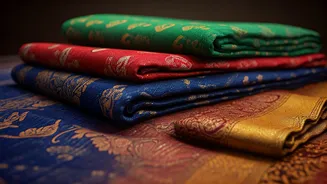
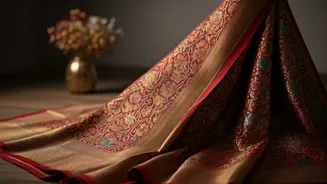
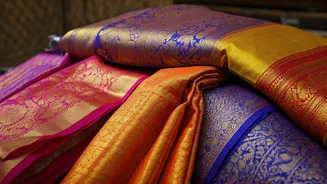
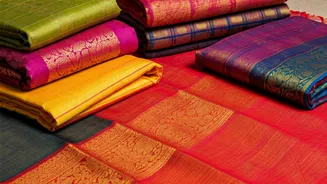
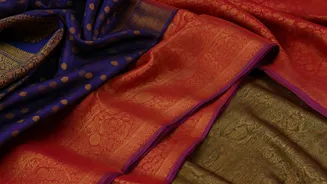
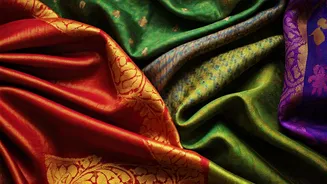
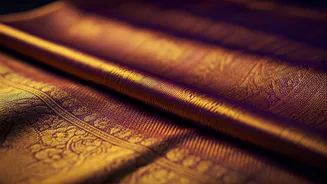
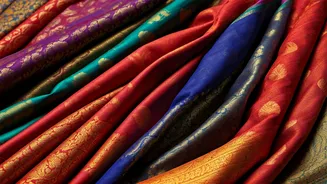
The southern states of India are renowned for their exquisite saree craftsmanship, where architectural weaves meet the finest materials. Tamil Nadu's Kanjeevaram
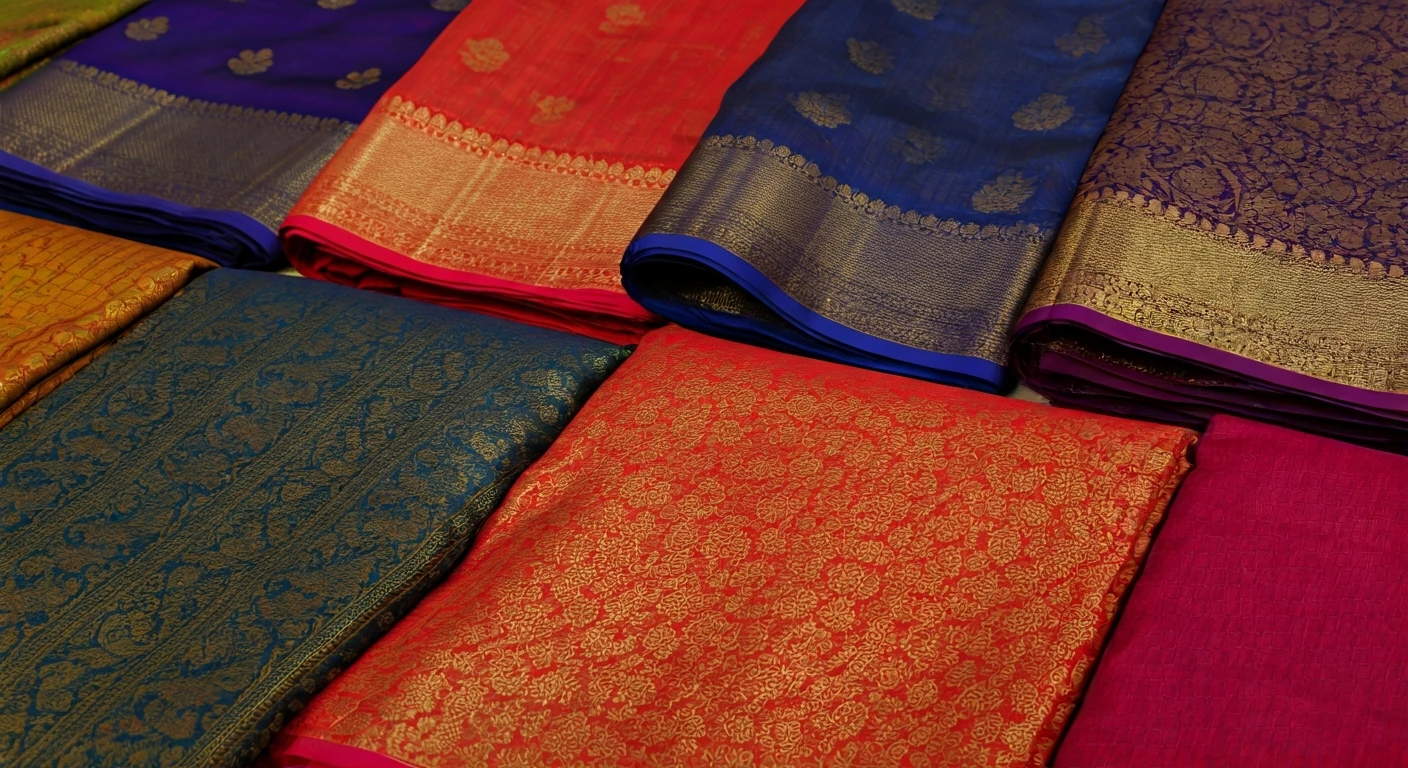
is a true heavyweight, celebrated for its pure mulberry silk adorned with intricate zari temple borders, exuding unparalleled grandeur. In contrast, Kerala's Kasavu offers a vision of understated elegance with its crisp white cotton, delicately edged in radiant gold, symbolizing purity and sophistication. Karnataka's Ilkal sarees are instantly recognizable by their distinctive red 'tope teni' pallu, a unique design element that adds a vibrant flair. Andhra Pradesh presents the Uppada Jamdani, a marvel of delicate zari work that allows the fabric to breathe, offering a light and airy feel. Telangana rounds off this southern quartet with the Pochampally Ikat, a masterpiece of geometric precision and exceptionally smooth silk-cotton blend, showcasing the intricate art of tie-dye.
Northern Royal Threads
Moving north, the saree traditions reflect a blend of royal heritage and practical artistry suited to the mountainous terrain. Uttar Pradesh is home to the magnificent Banarasi, a heavily brocaded creation featuring elaborate gold and silver floral motifs that instantly capture attention and exude opulence. Punjab offers a burst of color and joy with its Phulkari, a vibrant canvas where intricate flower embroidery tells tales of celebration. Haryana contributes the Resham Dhuria, a comfortable yet festive saree that combines silk embroidery on soft cotton, perfect for everyday elegance. As we ascend into the Himalayas, Himachal Pradesh's Kullu Patti sarees stand out with their vivid geometric patterns, often inspired by shawl designs, woven into wool or cotton. Uttarakhand's Panchachuli weaves provide a more understated yet fine elegance, handcrafted by women of the Himalayan region, showcasing natural beauty and skill.
Western Dyes & Textures
Western India is a vibrant showcase of intricate dyeing techniques and luxurious textiles. Rajasthan's classic Bandhani sarees bring the desert's spirit to life through intensely saturated, fluid tie-dye patterns, a testament to age-old artisanal skill. Gujarat, on the other hand, is famed for its Patola, a meticulously crafted double-ikat masterpiece, a complex process requiring months of precision and resulting in mathematically perfect designs. Maharashtra's Paithani silk sarees are the epitome of luxury, distinguished by their stunning peacock motifs gracing the pallus. Goa offers the Kunbi saree, a testament to coastal tribal heritage; this highly breathable, red-checked cotton drape is both practical and culturally rich. In the heart of India, Madhya Pradesh presents the Chanderi, a feather-light, translucent silk-cotton blend that is the ultimate garment for surviving the summer heat with grace. Chhattisgarh complements this with Kosa Silk, a beautiful, slightly coarse silk with a matte finish, often adorned with striking tribal art.
Eastern Narratives & Northeast Artistry
The eastern regions of India are characterized by their rich storytelling through textiles and a deep connection to natural textures. West Bengal's Baluchari sarees are literal wearable epics, with their pallus intricately woven to depict entire scenes from mythological tales like the Ramayana or Mahabharata, transforming the garment into a visual narrative. Bihar offers the eco-friendly Bhagalpuri Tussar, known for its rustic finish and versatility, seamlessly transitioning from a busy professional setting to an elegant evening event. Jharkhand's Tribal Tussar and Odisha's Sambalpuri Ikat, with its signature hazy tie-dye patterns, remain deeply connected to natural motifs and local art forms. The Northeast is a veritable treasure trove of sustainable and intricate artistry. Assam's golden Muga Silk is legendary, a unique silk that surprisingly becomes glossier with each wash, a hallmark of its exceptional quality. Meghalaya's Eri Silk, also known as peace silk, offers a gorgeous matte finish and is celebrated for its thermal-regulating properties, making it comfortable in various climates. Arunachal Pradesh's Apatani weaves and Sikkim's Lepcha sarees introduce earthy, minimalist tribal stripes that bring a contemporary feel to traditional aesthetics. Nagaland showcases breathtaking geometric clan patterns in its Naga Motif drapes, while Mizoram features tight weaves and bold stripes in its Puan-inspired sarees, reflecting distinct cultural identities. Tripura's Risa-inspired fabrics boast distinct tribal flashes, and finally, Manipur's sheer cotton Moirang Phee stands out with its delicate, temple-like edge motifs, completing the Northeast's diverse textile landscape.