




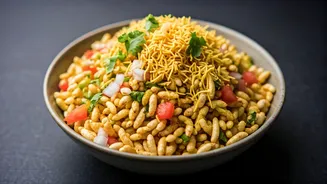
The Ubiquitous Potato
The potato, a staple in countless Indian dishes from hearty curries and flaky parathas to vibrant street food chaats, is so deeply ingrained in our culinary
landscape that it feels as though it has always been here. However, this versatile tuber's origins lie far from the Indian subcontinent, in the high-altitude Andean regions of South America. Cultivated by the ancient Inca civilization, the potato eventually embarked on a global voyage, making its way to Europe and subsequently to India. Its adaptability and affordability made it a culinary chameleon, readily absorbing the complex spices and cooking techniques of Indian cuisine, thus becoming an indispensable part of everyday meals and festive treats alike.
Tomato's Andean Roots
It's almost impossible to envision modern Indian cooking without the vibrant tang of tomatoes. Yet, this essential ingredient also embarked on a long journey from across the seas. Originating in the Andes Mountains and later cultivated in ancient Mexico, tomatoes were introduced to Europe by the Spanish in the 16th century. Their passage continued, eventually reaching Indian kitchens where they became a cornerstone for balancing flavors, adding a crucial sourness to gravies, chutneys, and sauces. Beyond their culinary significance, tomatoes are rich in lycopene, a potent antioxidant responsible for their red hue, which is known to promote heart health and may offer protection against certain diseases. The antioxidants within tomatoes also play a role in safeguarding our skin from environmental damage, potentially contributing to a healthier, radiant complexion.
The Fiery Chilli Pepper
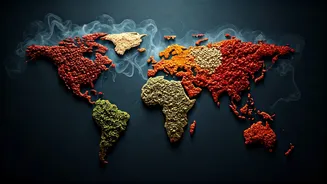
The perception of Indian food is often synonymous with a delightful kick of heat, a characteristic many assume is indigenous. However, the fiery chilli pepper's story begins in the Americas. Research indicates that the domesticated Capsicum annuum variety likely originated in Mexico, with other species independently cultivated across Central and South America. Introduced to Europe in the late 15th century, chillies then traversed continents, spreading through Asia and Africa. While India didn't originate the chilli, it certainly mastered its use, integrating it so profoundly that it now feels like an innate part of the nation's culinary instinct, a testament to its transformative culinary prowess.
Cauliflower's Western Ascent
Cauliflower wears its Indian disguise exceptionally well. It's a familiar sight in dishes like aloo gobi, creamy kormas, quick stir-fries, and popular street food snacks, making its foreign origins a surprise to many. This cruciferous vegetable actually hails from Western Asia, where it was known to ancient civilizations such as the Persians, Greeks, and Romans. Its journey led it to adapt and integrate into various culinary traditions, eventually becoming a commonplace vegetable in Indian households. While its current Indian identity is strong and authentic, it represents a later chapter in its long and fascinating global journey.
The Transcontinental Samosa
The samosa, arguably India's most cherished savory snack, possesses a history that traces back much further than the subcontinent. Its lineage is linked to medieval filled pastries originating from the Middle East and Central Asia, known by names like 'sanbusak'. These precursors arrived in India through royal courts and trade routes, where they underwent a remarkable transformation. Indian cooks refined the concept, resulting in the iconic crisp, triangular pastry bursting with spiced fillings that has become synonymous with Indian tea time and gatherings. India didn't just adopt the samosa; it redefined it into the beloved version we know today.
Naan: A Persian Legacy
The soft, often buttery naan, a staple in Indian restaurants worldwide, carries a name with Persian roots. Historical accounts suggest that 'naan' is derived from the Persian term 'nân-e sangak', and it was noted in Indian literature as early as the 14th century. This flatbread likely traveled along the extensive cultural and trade pathways connecting Persia, Central Asia, and India. Over centuries, as culinary exchanges flourished, wheat breads baked in tandoors adapted to local palates, becoming a prominent feature of North Indian cuisine. Initially associated with Mughal royalty, naan eventually gained widespread popularity, demonstrating how a borrowed bread found its most celebrated expression in India.
Jalebi's Western Sweetness
Jalebi, a quintessential Indian sweet, evokes images of festive mornings, gift boxes of mithai, and bustling sweet shops. Yet, its origins trail westward, with historical references pointing to similar syrupy confections found in Arabic and Persian culinary texts under names like 'zalabiya' and 'zolbiya'. These sweets spread through the Middle East before making their way to India. Over time, the Indian rendition evolved, becoming brighter, crispier, and more visually striking, culminating in the recognizable orange, coiled form that is now an inseparable part of Indian bazaars and celebrations. While the concept traveled, India undoubtedly perfected its final, unforgettable presentation.